C41
Kodak Portra 400
Kodak Portra 400 is a professional C-41 color negative film known for flexible exposure latitude, natural skin tones, and fine grain.
View profile35mm SLR
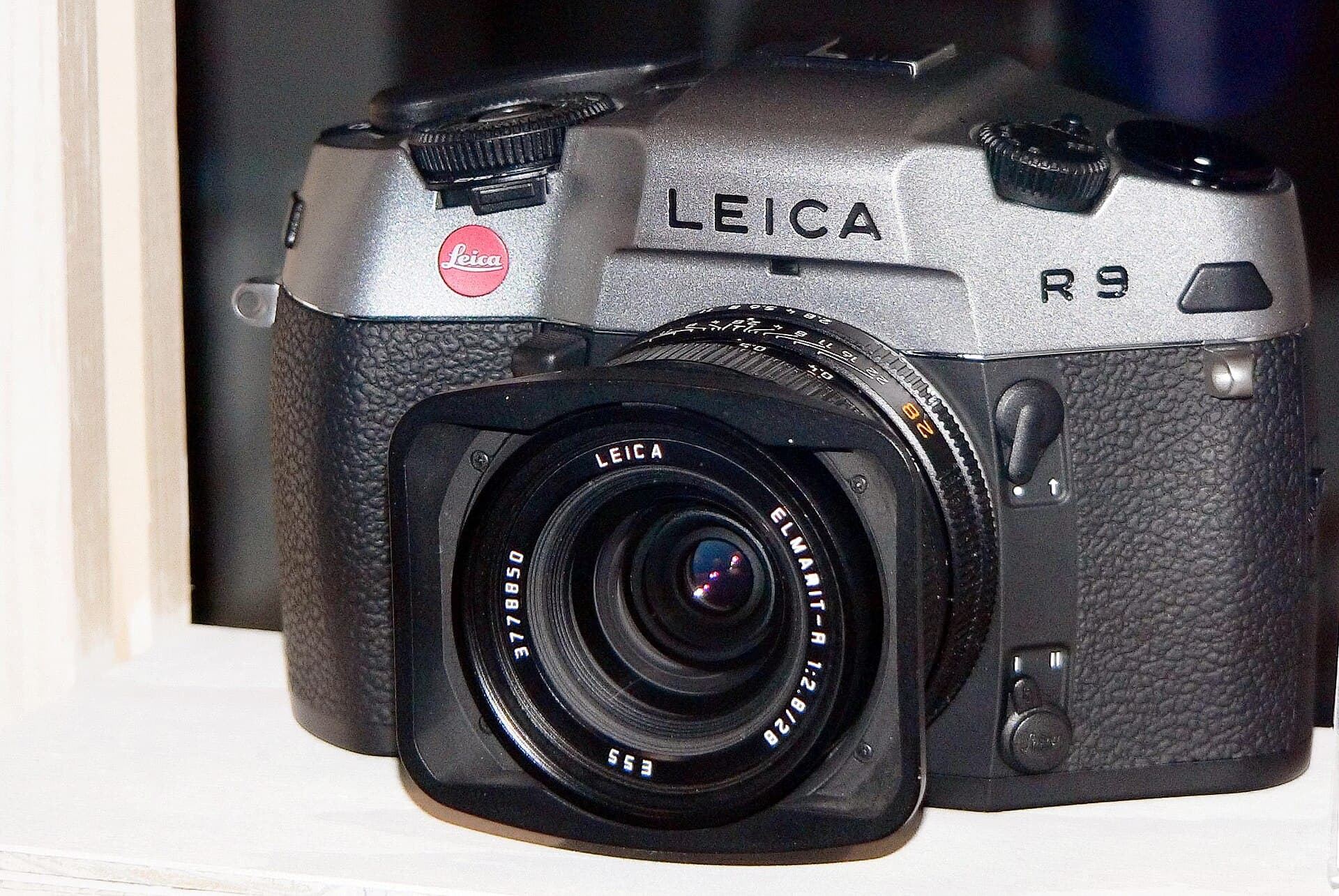
The Leica R9 (2002) is the final camera in Leica's R-series SLR line, refining the R8 (1996) with a 1/8000s maximum shutter speed, improved multi-segment metering, and compatibility with the Leica Digital Modul R (DMR) — a removable digital back (10 megapixels, Kodak CCD sensor) that transformed the R9 into a digital SLR. The body retains the R8's distinctive asymmetric design with the sloped top plate, large grip, and understated black finish. All Leica R-mount lenses (with appropriate ROM chip or non-ROM flagging) attach and meter normally. Manual focus is standard; a focus confirmation LED in the viewfinder assists.
Reference
Recommended film stocks for the 35mm format your camera takes.
C41
Kodak Portra 400 is a professional C-41 color negative film known for flexible exposure latitude, natural skin tones, and fine grain.
View profileBW
Kodak Tri-X 400 is a classic black-and-white film known for strong tonality, visible grain, and documentary character.
View profileC41
Kodak Gold 200 is a daylight-balanced C-41 color negative film with warm color, moderate grain, and a classic consumer-film look.
Develop 35mm film
Labs in our directory that process 35mm film.
Before you buy used
About this camera
Leica's last SLR — the R9 paired the R8's distinctive industrial design with 1/8000s shutter speed, multi-pattern metering, and a unique Digital Modul R that turned it into a DSLR.
| Field | Value |
|---|
| Format | 35mm |
| Mount | Leica R bayonet (3-cam, ROM compatible) |
| Years | 2002–2009 |
| Shutter | 16s – 1/8000s + B, vertical-travel metal blades |
| Flash sync | 1/250s |
| Meter | TTL multi-segment, EV 1–20 |
| Modes | Aperture-priority, Shutter-priority, Program, Manual |
| Viewfinder | Pentaprism, 0.77× |
| Digital option | Digital Modul R (DMR) replaces film back |
| Weight | 660 g (body only) |
Leica introduced the R-series in 1964 with the Leicaflex — a late entry into the SLR market that used the existing Leica lens heritage in a new reflex design. The R-mount evolved through the Leicaflex SL (1968), SL2 (1974), R3 (1976, Minolta co-development), R4 (1980), R5 (1987), R6 (1992, fully mechanical), R7 (1992), R8 (1996), and finally the R9 (2002).
The R8 and R9 were developed wholly in-house by Leica without Minolta involvement (unlike the R3–R7), giving them a more distinctly Leica character. The R9 added the 1/8000s speed and re-engineered electronics to support the DMR digital back, which was developed with Imacon/Hasselblad and launched in 2004. The DMR was a genuine hybrid attempt — allowing R9 users to switch between film (the film back) and digital (the DMR) on the same body with the same lenses.
Despite its technical sophistication, the R system never achieved the iconic status of the Leica M rangefinder. Leica formally ended R-system production in 2009 and ceased DMR production shortly after.
The Leica R9 is significant for several reasons. As the last Leica SLR, it represents the end of a 45-year lineage of German precision SLR manufacture. The R-system lenses — APO-Summicron-R 90/2 ASPH, Summilux-R 80/1.4, Elmarit-R 19/2.8, Summicron-R 35/2 — are among the finest SLR lenses ever made, and they mount and meter on the R9 with full compatibility. The 1/8000s shutter speed and 1/250s flash sync are genuinely superior to most film SLRs.
The DMR option, while now obsolete as a digital capture device, was an innovative engineering solution that prolonged the R9's commercial relevance past the peak of the DSLR transition. Today the R9 is used primarily as a film camera by photographers who own R-mount lenses and want a modern body for them.
Leica R bayonet (1-cam, 2-cam, 3-cam, ROM variants). All Leica R lenses from Leicaflex era onward mount with appropriate cam configuration. Notable lenses: APO-Summicron-R 180/2 ASPH, APO-Macro-Elmarit-R 100/2.8, Summicron-R 35/2, Summicron-R 90/2, Elmarit-R 28/2.8 ASPH, Summilux-R 50/1.4, Noctilux-R 50/1.0 (extremely rare). Accessories: Digital Modul R (DMR), Motor-Drive R (adds ~3.5 fps), Leica SF58 and SF40 flash for TTL, ROM adapter for older lenses.
C41
Fujifilm Superia X-TRA 400 (marketed as Superia 400 in some regions) is an ISO 400 C-41 consumer color negative film in 135 format, one of Fujifilm's most popular consumer films. It delivers warm, vibrant colors with moderate grain and remains in production in some markets.
View profileBW
Ilford HP5 Plus is a flexible ISO 400 black-and-white film with classic grain and strong push-processing tolerance.
View profileC41
Kodak Ektar 100 is a fine-grain C-41 color negative film with saturated color and high sharpness.
View profile