C41
Kodak Portra 400
Kodak Portra 400 is a professional C-41 color negative film known for flexible exposure latitude, natural skin tones, and fine grain.
View profile35mm SLR
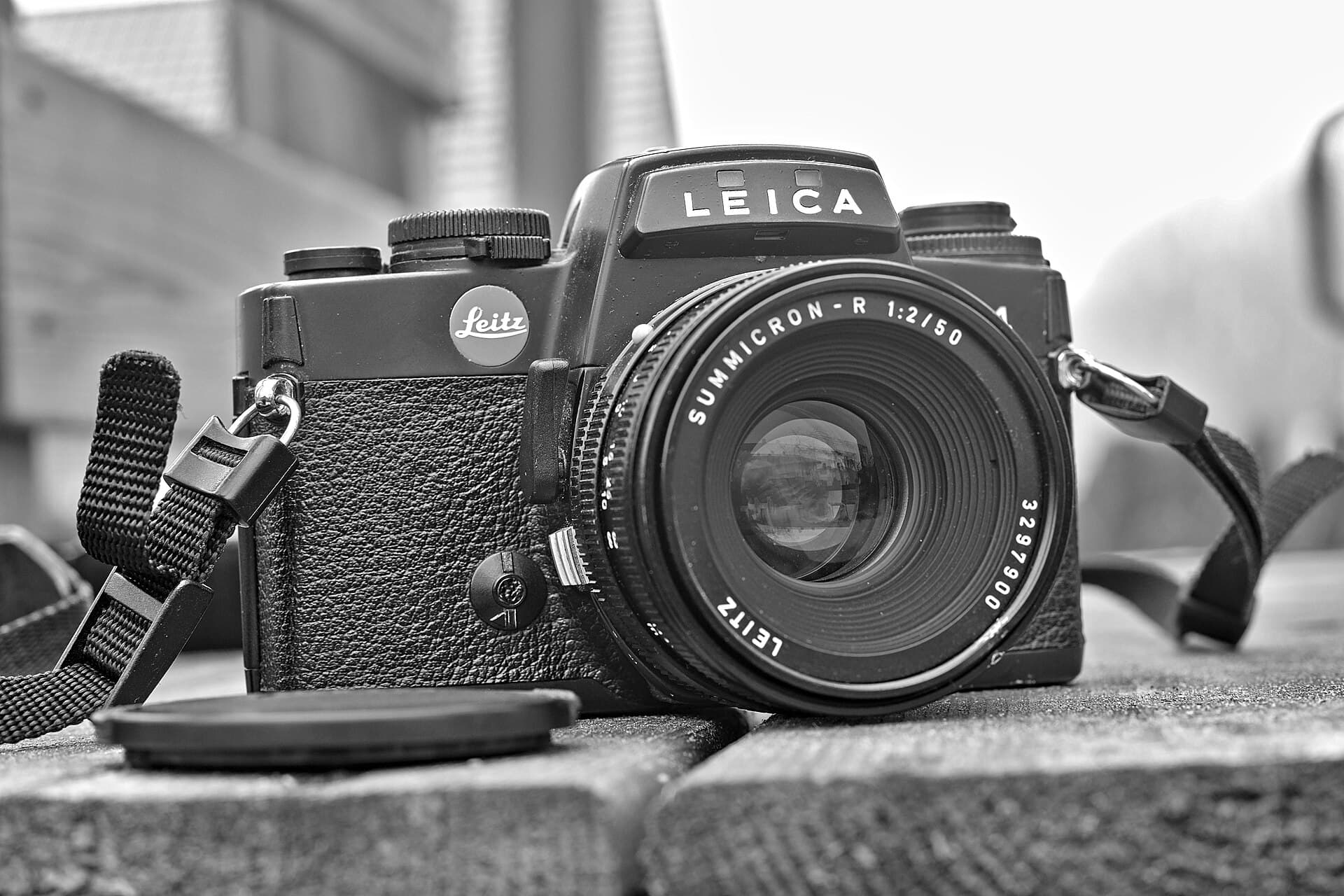
The Leica R4 (1980) is a major step forward from the R3 in both capability and ergonomics. Like the R3, it is co-developed with Minolta — this time based on the Minolta XD-11 (XD-7 in Europe), which was the world's first camera to offer both aperture-priority and shutter-priority automation in a single body. The R4 inherits that multi-mode architecture, adding full PASM (Program, Aperture-priority, Shutter-priority, Manual) selection that the R3's simpler AE/M configuration lacked.
Reference
Recommended film stocks for the 35mm format your camera takes.
C41
Kodak Portra 400 is a professional C-41 color negative film known for flexible exposure latitude, natural skin tones, and fine grain.
View profileBW
Kodak Tri-X 400 is a classic black-and-white film known for strong tonality, visible grain, and documentary character.
View profileC41
Kodak Gold 200 is a daylight-balanced C-41 color negative film with warm color, moderate grain, and a classic consumer-film look.
Develop 35mm film
Labs in our directory that process 35mm film.
Before you buy used
About this camera
The R4 brought full PASM automation to the Leica R system — aperture-priority, shutter-priority, programme, and manual — in a body derived from the Minolta XD-11 and significantly smaller than the Leicaflex it succeeded.
| Field | Value |
|---|
| Format | 35mm |
| Mount | Leica R bayonet (3-cam; ROM not supported) |
| Years | 1980–1986 |
| Shutter | 4s – 1/2000s + B, vertical-travel metal blades |
| Flash sync | 1/100s |
| Meter | TTL centre-weighted / selective (partial), EV 1–18 |
| Modes | Program, Aperture-priority, Shutter-priority, Manual |
| Viewfinder | Pentaprism, 0.84× |
| Weight | ~560 g (body only) |
| Battery | 2× PX28 (4LR44) — required for all operation |
| Mechanical fallback | None |
The R4 arrived at Photokina 1980, four years after the R3, and represented a meaningful generational leap. The Minolta XD platform on which it was based had been refined since 1977 and was regarded as one of the most technically accomplished 35mm SLR mechanisms of the late 1970s — precise, compact, and reliable. Leica's contribution was the mount engineering, quality control standards, and the R-system lens catalogue that the body could exploit.
The R4 quickly supplanted the R3 as the entry-point R body and remained in production until 1986, when the R5 refined the system further. Variants included the R4S (stripped to aperture-priority only, sold at a lower price point) and a small run of R4 bodies in olive drab for professional/photojournalism use.
The R4 was Leica's first R body to achieve meaningful commercial sales in markets outside Europe, partly because the PASM mode selection aligned with expectations set by Japanese competitors and partly because the body was the most ergonomically modern Leica SLR to date.
The R4 is the most affordable Leica R body with full PASM automation and 1/2000s maximum shutter speed — two capabilities unavailable on the R3. For photographers building an R-mount lens system on a working budget, the R4 offers the broadest exposure mode selection of any early R body at typically low used prices.
Its battery dependence (no mechanical fallback) is the primary practical limitation — the R4 is entirely inoperable without its PX28 / 4LR44 battery. Photographers who require a mechanical fallback should consider the R6 (1992) instead, which has a mechanical shutter independent of batteries.
The R4's Minolta XD heritage is well-regarded: the shutter mechanism is reliable and the meter electronics have generally aged well over 40+ years.
Leica R bayonet (3-cam for full open-aperture metering and PASM coupling; 2-cam for stop-down metering; 1-cam Leicaflex lenses stop-down only). Programme mode requires 3-cam lenses for proper coupling. Compatible lenses: Summicron-R 50/2, Summilux-R 50/1.4, Elmarit-R 28/2.8, Summicron-R 90/2, Elmarit-R 90/2.8, Elmarit-R 135/2.8, Vario-Elmar-R 35–70/3.5, Apo-Summicron-R 180/3.4. Accessories: Motor Drive R (for R4MOT variant); winder R; SCA-system flash TTL via appropriate adapter.
C41
Fujifilm Superia X-TRA 400 (marketed as Superia 400 in some regions) is an ISO 400 C-41 consumer color negative film in 135 format, one of Fujifilm's most popular consumer films. It delivers warm, vibrant colors with moderate grain and remains in production in some markets.
View profileBW
Ilford HP5 Plus is a flexible ISO 400 black-and-white film with classic grain and strong push-processing tolerance.
View profileC41
Kodak Ektar 100 is a fine-grain C-41 color negative film with saturated color and high sharpness.
View profile