C41
Kodak Portra 400
Kodak Portra 400 is a professional C-41 color negative film known for flexible exposure latitude, natural skin tones, and fine grain.
View profile35mm SLR
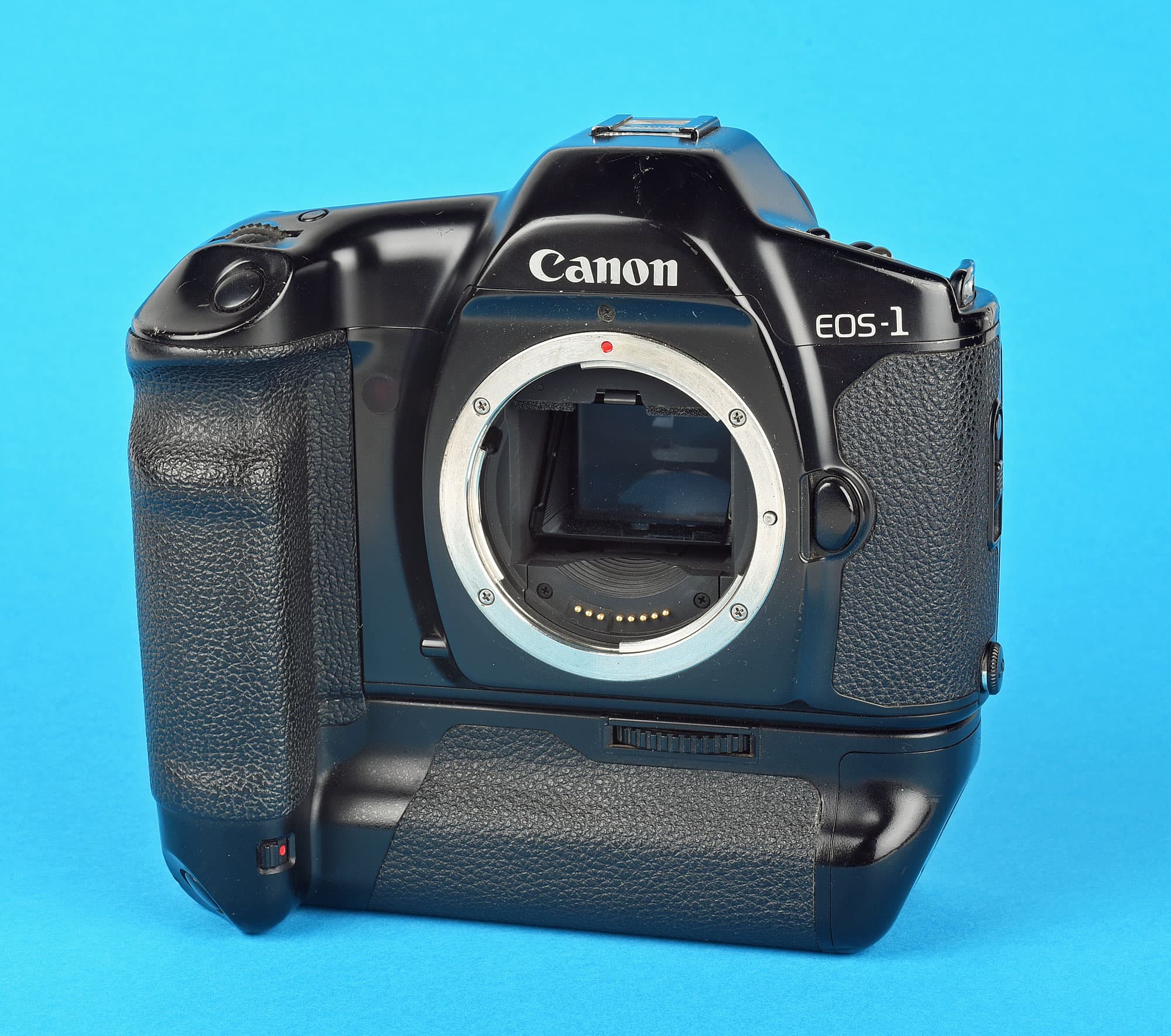
The Canon EOS-1 (1989) was Canon's first professional autofocus body — and the camera that ended the FD lens system in favor of the new EF mount. Single-point autofocus (Multi-BASIS), 6-zone evaluative metering, 1/8000s shutter, 1/250s flash sync, weather-sealed magnesium chassis. The PB-E1 grip added a NP-E2 NiCd battery for vertical control and 5.5 fps with motor drive. Replaced the FD-mount New F-1 in Canon's pro line.
Reference
Recommended film stocks for the 35mm format your camera takes.
C41
Kodak Portra 400 is a professional C-41 color negative film known for flexible exposure latitude, natural skin tones, and fine grain.
View profileBW
Kodak Tri-X 400 is a classic black-and-white film known for strong tonality, visible grain, and documentary character.
View profileC41
Kodak Gold 200 is a daylight-balanced C-41 color negative film with warm color, moderate grain, and a classic consumer-film look.
Develop 35mm film
Labs in our directory that process 35mm film.
Before you buy used
About this camera
The first professional EOS. 1989's transition from FD-mount New F-1 to EF-mount autofocus pro Canon.
| Field | Value |
|---|
| Format | 35mm |
| Mount | Canon EF |
| Years | 1989–1994 |
| Shutter | 30s – 1/8000s + Bulb, electronic vertical cloth |
| Flash sync | 1/250s |
| Meter | TTL 6-zone evaluative SPD |
| AF | Single-point Multi-BASIS |
| Frame rate | 2.5 fps body; 5.5 fps with PB-E1 grip |
| Weight | 850 g |
| Battery | 2× CR123A / NP-E2 with PB-E1 grip |
Released September 1989, the EOS-1 was Canon's commitment to the EF lens system as the future pro mount. The launch effectively retired the FD New F-1 (which continued in production through 1992 for inventory clearance). Production of the EOS-1 ran 5 years until the EOS-1N (1994) replaced it. Olympic press pools 1992 Barcelona and Albertville used EOS-1 bodies.
The EOS-1 is historically important — it ended the FD era, started the EF era, and proved Canon could build pro AF cameras at Nikon F-mount level. Used today at $200–500, it's significantly cheaper than the EOS-1N or 1V, but the single-point AF is dated and the meter is less sophisticated than later bodies. For collectors and historians of the EF system, it's a meaningful body. For working photographers, the EOS-1N or later is a better choice for the same money.
Full Canon EF lens system (1989+). PB-E1 grip with NP-E2 NiCd battery. Speedlite 540EZ, 430EZ flashes for ETTL.
C41
Fujifilm Superia X-TRA 400 (marketed as Superia 400 in some regions) is an ISO 400 C-41 consumer color negative film in 135 format, one of Fujifilm's most popular consumer films. It delivers warm, vibrant colors with moderate grain and remains in production in some markets.
View profileBW
Ilford HP5 Plus is a flexible ISO 400 black-and-white film with classic grain and strong push-processing tolerance.
View profileC41
Kodak Ektar 100 is a fine-grain C-41 color negative film with saturated color and high sharpness.
View profile