C41
Kodak Portra 400
Kodak Portra 400 is a professional C-41 color negative film known for flexible exposure latitude, natural skin tones, and fine grain.
View profileMedium Format Rangefinder
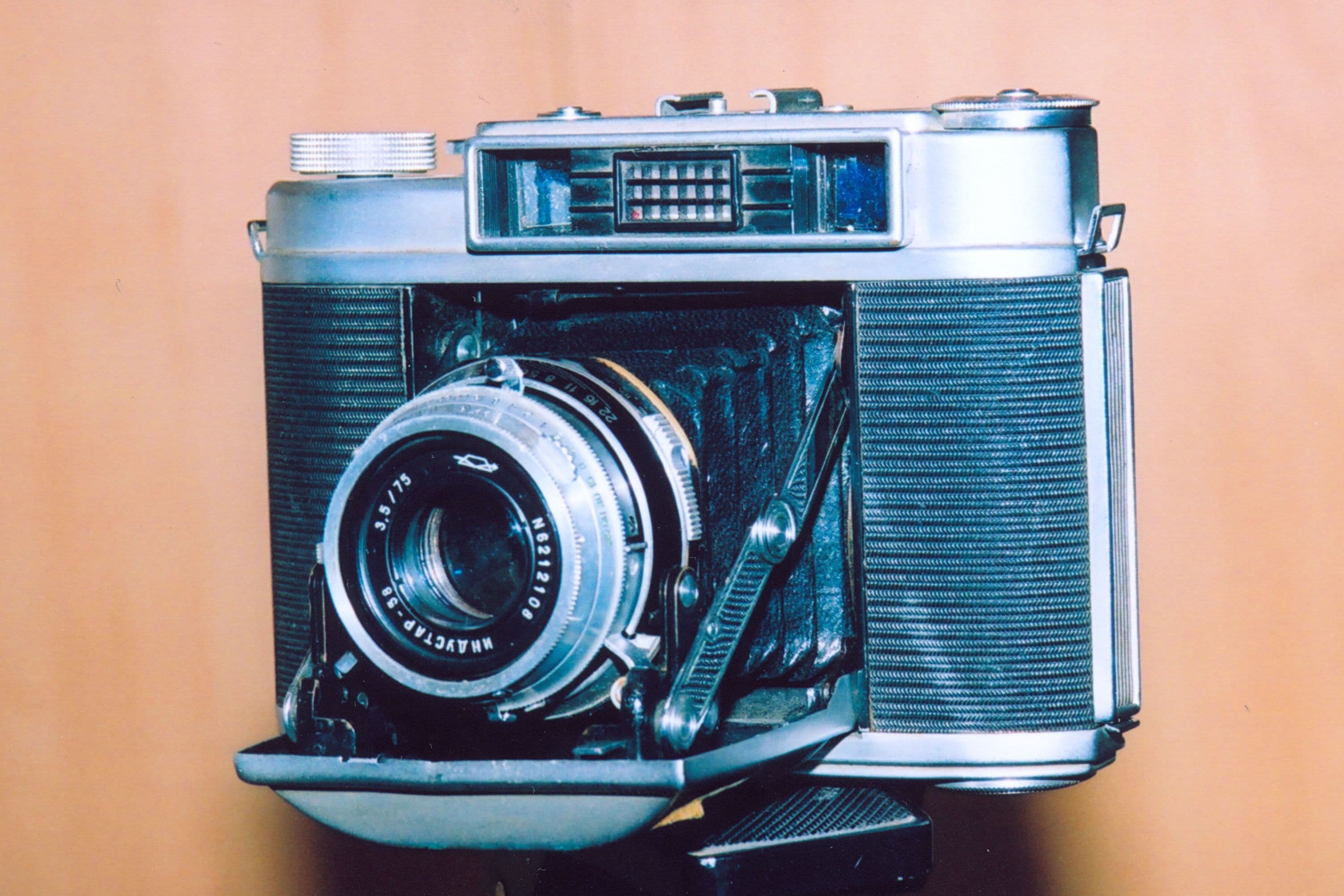
The Iskra-2 (Russian: Искра-2, "Spark-2") is a 6×6 format folding medium-format camera produced by KMZ (Krasnogorsk Mechanical Plant) from 1963 to approximately 1970. It is a direct successor to the original Iskra (1960–1963), retaining the coupled rangefinder and Industar-58 75mm f/3.5 Tessar-type lens but adding a built-in selenium exposure meter. The meter is uncoupled - it gives a reading that the user sets manually on the aperture and shutter controls - but its inclusion made the Iskra-2 a more self-contained tool for the advanced Soviet amateur. Like the original Iskra, it folds to a compact brick and offers a leaf shutter running from 1s to 1/500s with full flash sync at all speeds.
Reference
Recommended film stocks for the — format your camera takes.
C41
Kodak Portra 400 is a professional C-41 color negative film known for flexible exposure latitude, natural skin tones, and fine grain.
View profileC41
Kodak Portra 160 is a professional C-41 color negative film with fine grain, soft contrast, and natural color.
View profileC41
Kodak Ektar 100 is a fine-grain C-41 color negative film with saturated color and high sharpness.
Develop — film
We're growing the lab directory near you. Browse all labs.
Before you buy used
About this camera
The Iskra with a selenium meter added - KMZ's 6×6 folding rangefinder, 1963–1970, Industar-58 75/3.5.
| Field | Value |
|---|
| Format | 120 (6×6, 12 exposures) |
| Lens | Industar-58 75mm f/3.5 (Tessar copy) |
| Shutter | 1s – 1/500s + B, leaf shutter |
| Flash sync | All speeds (leaf shutter) |
| Rangefinder | Coupled |
| Meter | Selenium (uncoupled) |
| Weight | ~800 g |
| Battery | None (selenium meter is self-powered) |
KMZ introduced the original Iskra in 1960 as a refined 6×6 folder with a coupled rangefinder - a meaningful improvement over the zone-focus Soviet 120 cameras of the period. The Iskra-2 arrived in 1963, continuing the design with the addition of a selenium meter cell mounted on the top plate. This followed a common international pattern: German folders like the Voigtlander Bessa 66 and various Agfa models added meters to base rangefinder designs in the late 1950s. Production of the Iskra-2 ran until roughly 1970, ending the Iskra line. No Iskra-3 followed; KMZ's medium-format attention shifted to other projects.
The Iskra-2 is the more practical version of an already capable camera. The selenium meter, while uncoupled, removes the need for a separate light meter when shooting medium format with no experience estimating exposure. Selenium cells of this era often fail - the cell oxidises with age and produces low or zero output - which means many surviving Iskra-2 bodies have non-functional meters. When the meter works, the camera is a genuinely usable medium-format system. When it doesn't, it functions identically to the original Iskra. The Industar-58 resolves well at f/5.6 and smaller; wide-open shots at f/3.5 show soft edges typical of the Tessar formula in this era.
Fixed Industar-58 75/3.5. No interchangeable lens system. A standard PC sync socket accepts flash. No accessory shoe in the conventional sense; external accessories attach via an adapter. Filters thread onto the lens barrel at 49mm .
E6
Fujifilm Fujichrome Provia 100F (RDPIII) is a professional E6 reversal (slide) film in 135 and 120 formats, known for its natural, balanced color reproduction, very fine grain, and moderate saturation. It remains in production as of 2026 and is one of the last professional slide films available.
View profileBW
Kodak Tri-X 400 is a classic black-and-white film known for strong tonality, visible grain, and documentary character.
View profile