C41
Kodak Portra 400
Kodak Portra 400 is a professional C-41 color negative film known for flexible exposure latitude, natural skin tones, and fine grain.
View profileMedium Format Rangefinder
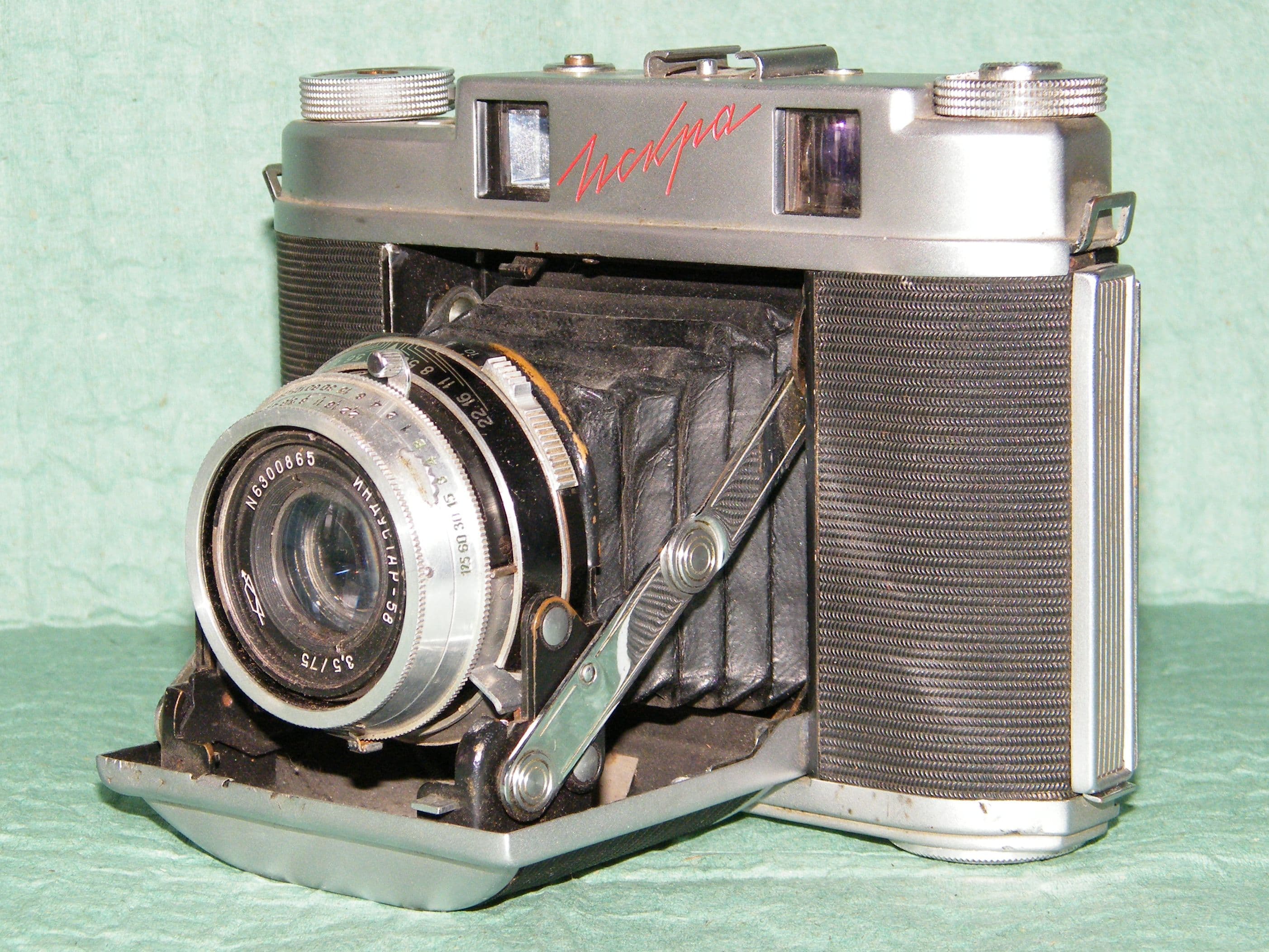
The Iskra-1 (Russian: Искра-1, "Spark-1") is the first production model of KMZ's 6x6 folding medium-format camera, made at the Krasnogorsk Mechanical Plant from 1960 to 1963. It shoots twelve 6x6 frames on 120 film and features a coupled rangefinder - an uncommon inclusion on Soviet roll-film folders of the era. The fixed lens is the **Industar-58 75mm f/3.5**, a four-element Tessar-type design with a coated front element. The shutter is a Soviet-made Compur derivative running from 1 second to 1/500s with full flash sync at all speeds, a consequence of the leaf shutter design.
Reference
Recommended film stocks for the — format your camera takes.
C41
Kodak Portra 400 is a professional C-41 color negative film known for flexible exposure latitude, natural skin tones, and fine grain.
View profileC41
Kodak Portra 160 is a professional C-41 color negative film with fine grain, soft contrast, and natural color.
View profileC41
Kodak Ektar 100 is a fine-grain C-41 color negative film with saturated color and high sharpness.
Develop — film
We're growing the lab directory near you. Browse all labs.
Before you buy used
About this camera
The original KMZ 6x6 folding rangefinder: Soviet medium format with coupled RF and no meter, produced 1960-1963.
| Field | Value |
|---|
| Format | 120 (6x6, 12 exposures) |
| Lens | Industar-58 75mm f/3.5 (Tessar copy) |
| Shutter | 1s - 1/500s + B, leaf shutter |
| Flash sync | All speeds (leaf shutter) |
| Rangefinder | Coupled |
| Meter | None |
| Weight | ~760 g |
| Battery | None required |
KMZ had produced the Moskva series of 6x9 folders through the 1950s as Soviet copies of the Zeiss Super Ikonta C. By the late 1950s, 6x6 was becoming the preferred medium format globally - smaller negatives, square framing, easier handling. The Iskra project was KMZ's response: a purpose-designed 6x6 folder with coupled rangefinder rather than the zone-focus or scale-focus arrangements common on cheaper Soviet cameras.
The Iskra-1 launched in 1960. Production ran only three years before being superseded by the Iskra-2 in 1963, which added a selenium exposure meter above the lens. The base model (Iskra-1) was therefore produced in smaller numbers than its successor, and surviving examples are proportionally scarcer. KMZ did not designate the original model as "Iskra-1" at the time of production - the numeral is a retronym that collectors use to distinguish it from the metered version.
For Soviet camera collectors and working film photographers, the Iskra-1 sits at an interesting intersection: it is a fully mechanical, meter-free medium-format rangefinder that works without any battery whatsoever. The coupled rangefinder separates it from the majority of Soviet 120 folders, which used zone or scale focus only. The Industar-58 75/3.5 produces results consistent with a Tessar formula at its best - sharp center resolution from f/5.6 onward, moderate corner falloff wide open, good contrast in even light.
The 6x6 negative (56x56mm) is roughly four times the area of a 35mm frame. Scanned or contact-printed, it delivers tonality that 35mm cannot match. At current used prices of $90-260, the Iskra-1 is among the more affordable entry points to coupled-rangefinder 6x6 photography outside German folders. The tradeoff is Soviet-quality mechanics: less tight than a Zeiss or Rollei, and service options are limited outside specialist repairers.
Fixed Industar-58 75mm f/3.5. No interchangeable lens system. Filter thread size is ~40.5mm.
The shutter accepts both PC sync cable for flash. No accessory shoe on the body; an aftermarket cold shoe can be fitted to the strap lug or body. Given the absence of a meter, carry a handheld meter or use the Sunny 16 rule as standard practice.
E6
Fujifilm Fujichrome Provia 100F (RDPIII) is a professional E6 reversal (slide) film in 135 and 120 formats, known for its natural, balanced color reproduction, very fine grain, and moderate saturation. It remains in production as of 2026 and is one of the last professional slide films available.
View profileBW
Kodak Tri-X 400 is a classic black-and-white film known for strong tonality, visible grain, and documentary character.
View profile