C41
Kodak Portra 400
Kodak Portra 400 is a professional C-41 color negative film known for flexible exposure latitude, natural skin tones, and fine grain.
View profile35mm Rangefinder
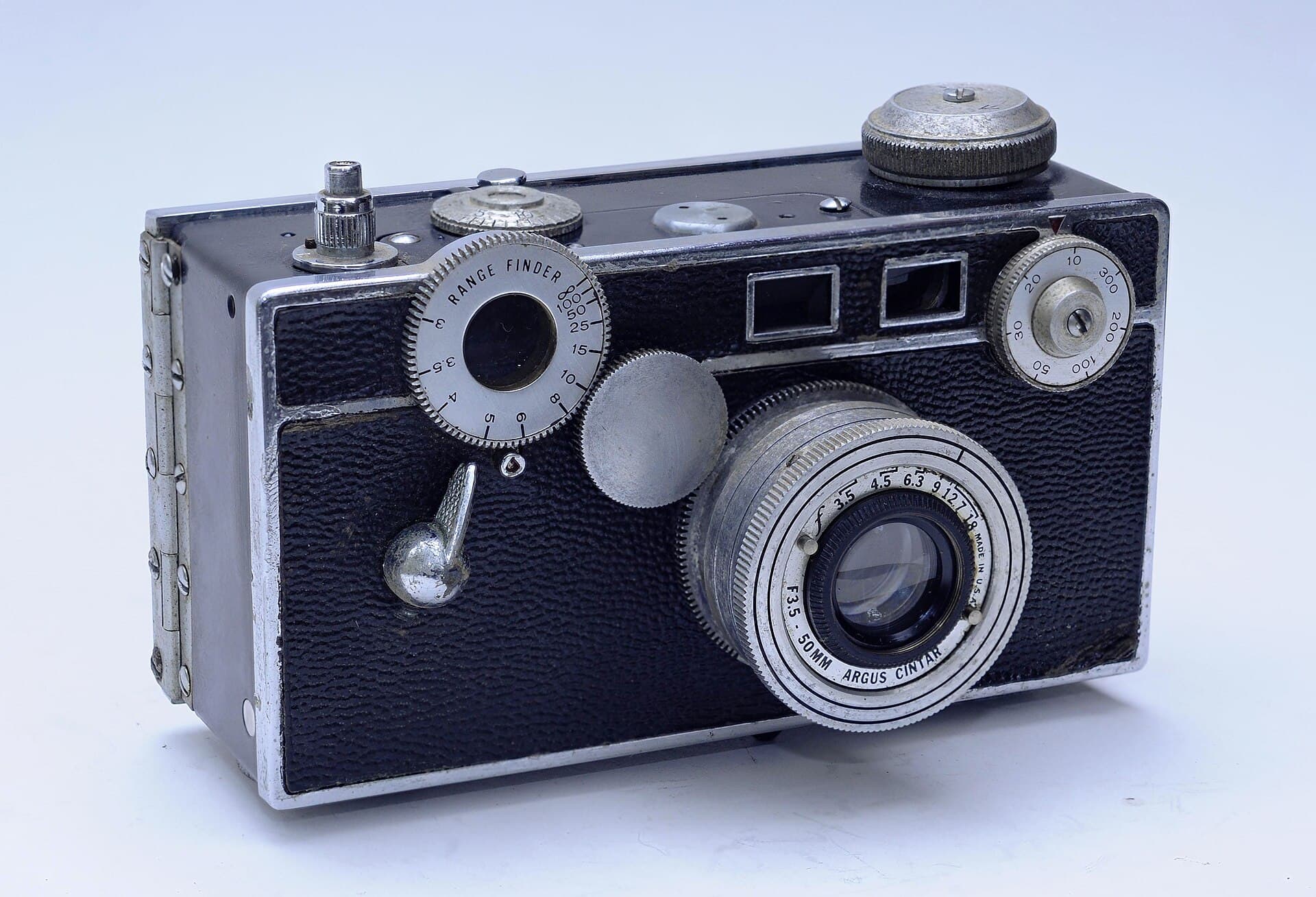
The Argus C3 (1939–1966) is the most commercially successful American 35mm camera in history, with approximately 2 million units sold over 27 years of production. It features a Bakelite body on a metal chassis, a fixed 50mm f/3.5 Coated Cintar lens (later production had Cintar coating; early examples are uncoated), a Betax rimset-cocking leaf shutter (1/10s–1/300s, B), and a rangefinder window physically separate from the viewfinder — a design that requires the user to look through one window to focus and another to compose. No meter, no automatic functions, no battery. Fully mechanical.
Reference
Recommended film stocks for the 35mm format your camera takes.
C41
Kodak Portra 400 is a professional C-41 color negative film known for flexible exposure latitude, natural skin tones, and fine grain.
View profileBW
Ilford HP5 Plus is a flexible ISO 400 black-and-white film with classic grain and strong push-processing tolerance.
View profileBW
Kodak Tri-X 400 is a classic black-and-white film known for strong tonality, visible grain, and documentary character.
Develop 35mm film
Labs in our directory that process 35mm film.
Before you buy used
About this camera
"The Brick." The best-selling American camera ever made. Bakelite body, 50mm f/3.5 Cintar, 1/300s Betax shutter, and a coupled rangefinder window that sits separate from the viewfinder — entirely its own thing, and entirely honest about it.
| Field | Value |
|---|
| Format | 35mm |
| Lens | 50mm f/3.5 Coated Cintar (later) / uncoated (pre-1940s) |
| Years | 1939–1966 |
| Shutter | 1/10s – 1/300s + B, Betax leaf, rim-set |
| Flash sync | X-sync (sync cable socket) |
| Meter | None |
| Focus | Rangefinder-coupled, separate window from VF |
| Weight | 530 g |
| Battery | None |
International Research Corporation (later Argus) introduced the C3 in 1939 at $35 — the price of a week's wages for many Americans. It democratized 35mm photography in the United States at a time when German Leicas and Contaxes cost ten to twenty times as much. Production ran with minimal changes from 1939 to 1966 — one of the longest continuous production runs of any camera design. Early bodies lack coating on the Cintar lens; postwar bodies added coating. The "Lady Argus" and "Match-Matic" variants added accessory meters in the 1950s–60s. The C3 was replaced by the C4 (interchangeable lens, more refined), then discontinued as Japanese imports took over.
The Argus C3 is a historical document as much as a camera. It shows how American industrial design approached the problem of 35mm photography — differently from German engineering (Leica's precision) or Japanese refinement (Canon, Nikon). The Betax shutter cocks separately from the film advance (a deliberate choice to simplify design). The dual-window rangefinder is awkward but effective. The Cintar lens, especially the coated postwar version, resolves well stopped down to f/8.
For collectors and historians, the C3 is essential. For shooters, it is an exercise in deliberate, slow photography: set distance via the rangefinder window, compose via the viewfinder, cock the shutter, shoot. The process forces engagement. Used prices are $10–60 for clean, working examples — the lowest of any 35mm coupled-rangefinder camera.
Lens is not interchangeable on the C3 (unlike the C4). Accessory "Argus" supplementary lenses (wide, tele) attach to the filter thread. Accessory selenium meters (Match-Matic, Cintar) clip onto the camera. PC sync cable for flash. Argus dedicated flash units (Argus Argoflex 75, Argoflash) were sold as accessories.
BW
Fujifilm Neopan 100 Acros is an ultra-fine-grain ISO 100 black-and-white negative film celebrated for its world-class granularity, wide tonal range, and exceptional reciprocity characteristics. The original Acros was discontinued in 2018; Acros II relaunched in November 2019 with a reformulated emulsion and is the current production version.
View profileC41
Kodak Portra 160 is a professional C-41 color negative film with fine grain, soft contrast, and natural color.
View profileC41
Kodak Gold 200 is a daylight-balanced C-41 color negative film with warm color, moderate grain, and a classic consumer-film look.
View profile