C41
Lomography Negative 400
Lomography Color Negative 400 is a versatile ISO 400 C-41 color negative film with vivid, saturated colors, believed to be a Kodak Alaris-manufactured emulsion, available in 35mm and 120 formats.
View profileToy & Novelty
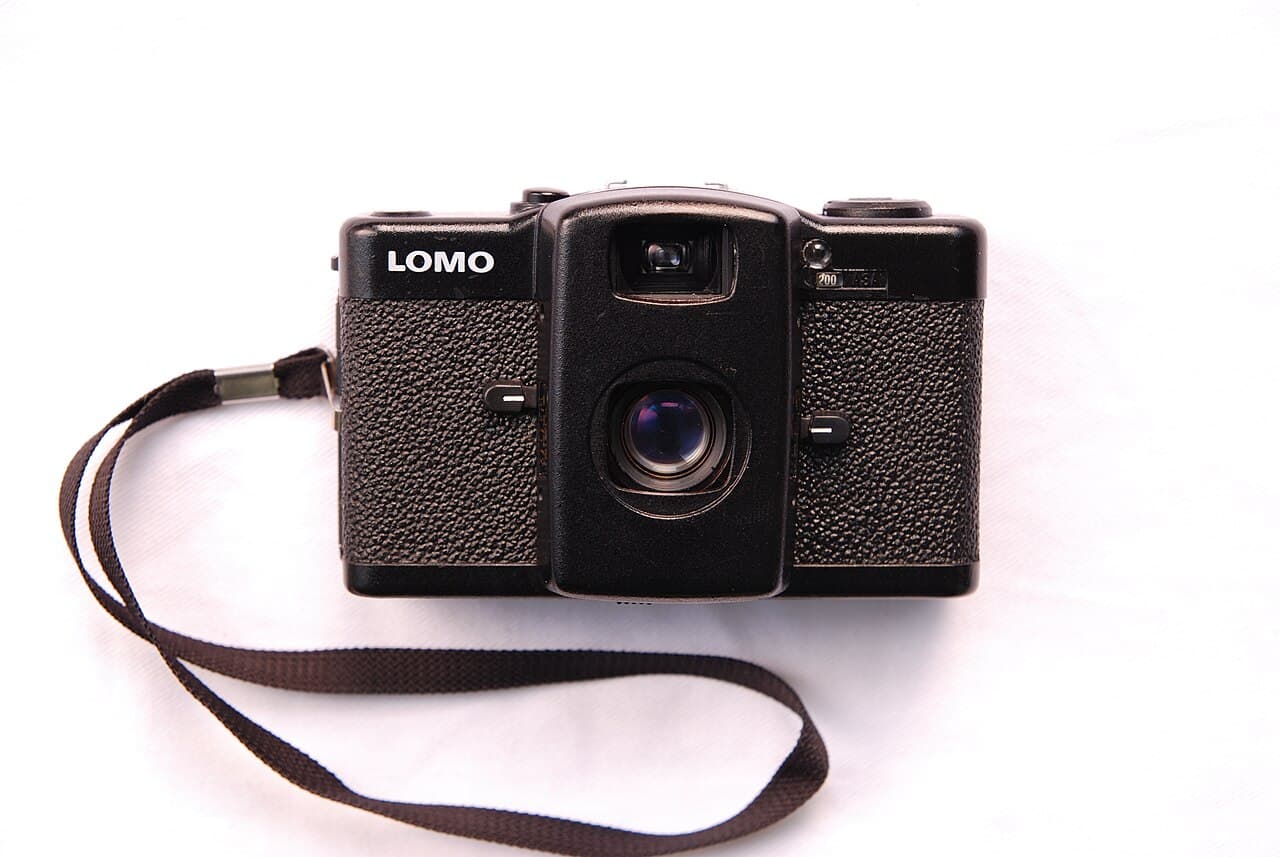
The LC-A is a 1984 Soviet 35mm compact, made by LOMO PLC in Leningrad. It uses a Minitar-1 32mm f/2.8 four-element glass lens, a CdS-metered programmed exposure system that accepts shutter speeds from 1/500s down to two-minute hand-held auto-exposures, and zone-focus with four positions (0.8 m, 1.5 m, 3 m, ∞). The lens vignettes hard at f/2.8, the exposure system pushes saturation, and the resulting images have a characteristic look that nothing else replicates.
Reference
Recommended film stocks for the 35mm format your camera takes.
C41
Lomography Color Negative 400 is a versatile ISO 400 C-41 color negative film with vivid, saturated colors, believed to be a Kodak Alaris-manufactured emulsion, available in 35mm and 120 formats.
View profileC41
Lomography Color Negative 800 is a high-speed ISO 800 C-41 color negative film widely suspected to be a Kodak-manufactured emulsion, delivering vibrant colors and adequate grain for challenging lighting conditions.
View profileC41
Develop 35mm film
Labs in our directory that process 35mm film.
Before you buy used
About this camera
A Soviet copy of a Cosina compact that became the founding camera of an entire art-photography movement.
| Field | Value |
|---|
| Format | 35mm |
| Lens | Minitar-1 32mm f/2.8 glass |
| Years | 1984–2005 (Soviet/Russian); LC-A+ 2006–present (Chinese) |
| Shutter | Up to 2 minutes auto, 1/500s max |
| Modes | Program only |
| Focus | Zone, 4 positions |
| Weight | 250 g |
| Battery | 3× LR44 |
Designed by LOMO PLC engineers in 1980, based reverse-engineered on the Japanese Cosina CX-1 (1980). Released 1984 for the Soviet domestic market and Eastern Bloc export. Sales were modest and the camera was discontinued in 1994. In 1991, two Viennese students — Matthias Fiegl and Wolfgang Stranzinger — found one on a trip to Prague, fell in love with its look, brought a few back, and founded the Lomographic Society International in 1992. They eventually negotiated continued production with LOMO PLC, then transferred manufacturing to China when the Russian factory's quality became inconsistent. The result is the LC-A+ (2006–present), which is the version sold today. Original Soviet LC-As are collector items.
Lomography is the only commercial camera movement built around a single 1980s body's aesthetic. The "Ten Golden Rules of Lomography" — shoot from the hip, don't worry about technique, take the camera everywhere — defined a generation's relationship with film photography. Lomography itself became a brand, a publishing house, a magazine, a chain of physical stores, and the largest distributor of 35mm and 120 film for the consumer market in 2026.
The LC-A's look — saturated colors, hard vignette, contrasty meter, occasional motion blur from the slow handheld shutter speeds — directly influenced Instagram filters and modern phone "vintage film" effects.
Lens fixed. Accessories: cable release, neck strap, case. Lomography sells the LC-A+ with multiple film bundle options.
Kodak Gold 200 is a daylight-balanced C-41 color negative film with warm color, moderate grain, and a classic consumer-film look.
C41
Fujifilm Superia X-TRA 400 (marketed as Superia 400 in some regions) is an ISO 400 C-41 consumer color negative film in 135 format, one of Fujifilm's most popular consumer films. It delivers warm, vibrant colors with moderate grain and remains in production in some markets.
View profileC41
Kodak Portra 400 is a professional C-41 color negative film known for flexible exposure latitude, natural skin tones, and fine grain.
View profileBW
Kodak Tri-X 400 is a classic black-and-white film known for strong tonality, visible grain, and documentary character.
View profile