C41
Lomography Negative 400
Lomography Color Negative 400 is a versatile ISO 400 C-41 color negative film with vivid, saturated colors, believed to be a Kodak Alaris-manufactured emulsion, available in 35mm and 120 formats.
View profileToy & Novelty
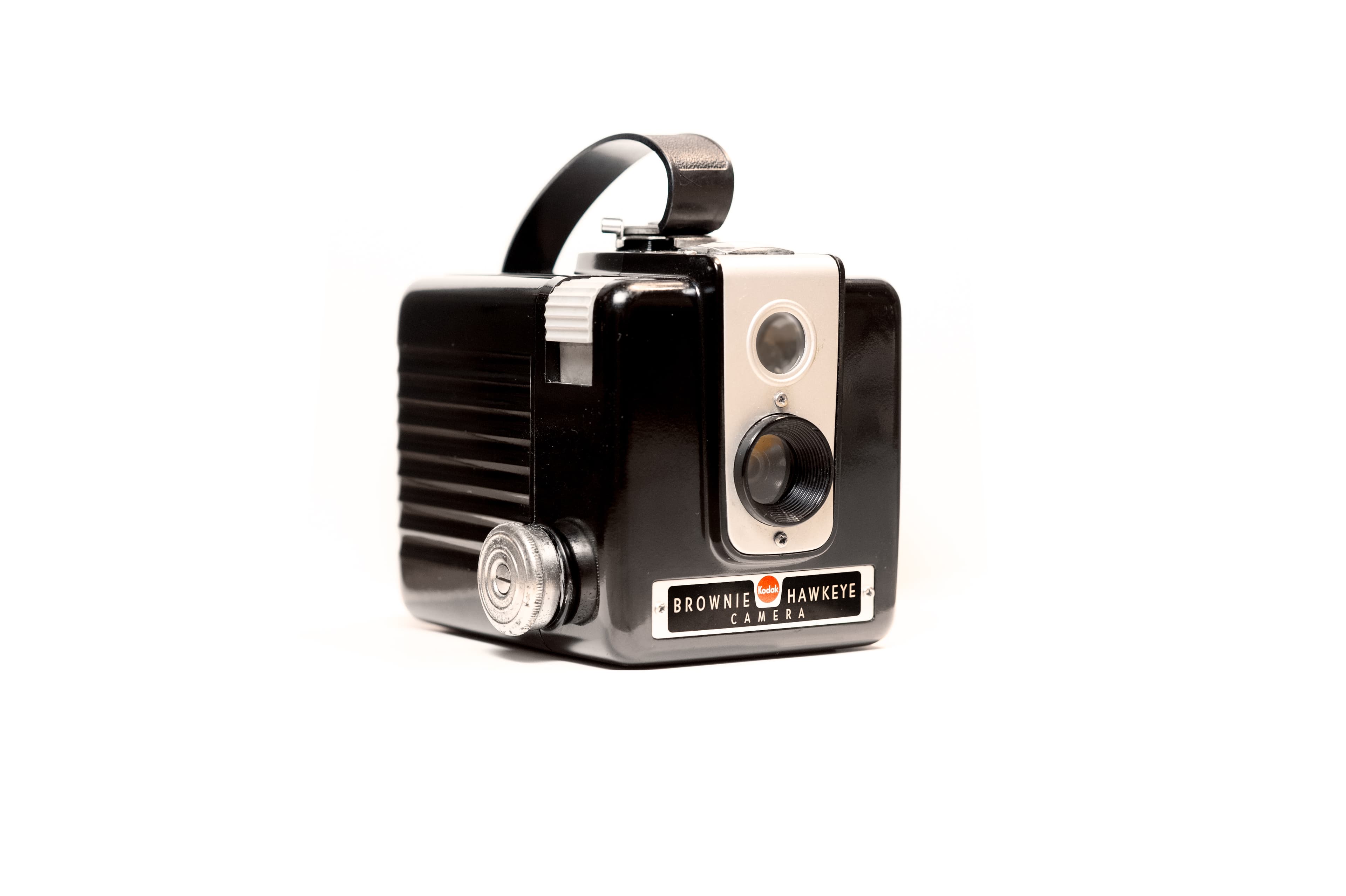
The Kodak Brownie Hawkeye is a fixed-focus, fixed-exposure box camera produced by Eastman Kodak from 1949 to 1961. Built from a single molded Bakelite shell, it shoots 620 roll film and produces 2-1/4 x 2-1/4 inch square negatives, twelve exposures per roll. The design is among the cleanest of the postwar Brownie family: the body is a smooth, rounded black box with a recessed lens panel and twin brilliant viewfinders -- one for horizontal framing, one for vertical. A single meniscus lens and rotary shutter require no adjustment from the user; the camera is ready to shoot out of the box.
Reference
Recommended film stocks for the — format your camera takes.
C41
Lomography Color Negative 400 is a versatile ISO 400 C-41 color negative film with vivid, saturated colors, believed to be a Kodak Alaris-manufactured emulsion, available in 35mm and 120 formats.
View profileC41
Lomography Color Negative 800 is a high-speed ISO 800 C-41 color negative film widely suspected to be a Kodak-manufactured emulsion, delivering vibrant colors and adequate grain for challenging lighting conditions.
View profileC41
Develop — film
We're growing the lab directory near you. Browse all labs.
Before you buy used
About this camera
The bakelite box camera that dominated American family photography in the postwar decade.
| Field | Value |
|---|
| Format | 620 film, 2-1/4 x 2-1/4 in (12 exp per roll) |
| Mount | Fixed (non-interchangeable) |
| Years | 1949-1961 |
| Lens | Single meniscus element |
| Shutter | Rotary: ~1/30s + B |
| Flash sync | PC sync (Flash Model only) |
| Meter | None |
| Focus | Fixed (hyperfocal) |
| Battery | None |
| Viewfinder | Twin brilliant (horizontal + vertical) |
Kodak introduced the Brownie Hawkeye in 1949 as a postwar refresh of the cardboard-and-leatherette box camera tradition. Where earlier Brownies -- the No. 2, the 2A, and the Six-20 -- used cardboard or die-cast metal bodies, the Hawkeye was designed from the outset as a single Bakelite molding, allowing lower production cost and a more modern aesthetic consistent with postwar American industrial design.
The Flash Model variant appeared in 1950, adding a PC synchronization socket to accommodate the flashbulb accessories that were becoming standard equipment for American amateur photographers attending family events, school portraits, and holiday gatherings. A matching aluminum reflector clip onto the camera's body. The base model without flash provision continued in parallel but was discontinued earlier; the Flash Model ran to the end of production in 1961.
The Hawkeye used 620 film, a Kodak proprietary spool format dimensionally similar to 120 but with a narrower core and shorter spool flanges, preventing direct substitution of the more widely available 120 format. This was a deliberate Kodak strategy to keep film purchase within the Kodak retail ecosystem.
The Brownie Hawkeye is the dominant survivor in American family photography archives from the late 1940s through the late 1950s. The square-format 2-1/4 x 2-1/4 negative, contact-printed or enlarged, was the standard output of the American domestic snapshot for roughly a decade. The camera's extreme simplicity -- no settings, no focus, no exposure judgment required -- made it usable by any household member, including children, aligning with the Brownie line's founding philosophy.
The Hawkeye also marks the point at which Bakelite fully replaced cardboard and leatherette as the box camera body material in Kodak's consumer lineup. The move to injected thermoplastic prefigured the direction of inexpensive consumer cameras through the 1960s and 1970s.
Today the Hawkeye is popular with film photographers who reload 620 spools with 120 film -- a common practice since the film stock is identical and only the spool differs. The square format and soft meniscus rendering are valued for their period character.
Kodak Gold 200 is a daylight-balanced C-41 color negative film with warm color, moderate grain, and a classic consumer-film look.
C41
Fujifilm Superia X-TRA 400 (marketed as Superia 400 in some regions) is an ISO 400 C-41 consumer color negative film in 135 format, one of Fujifilm's most popular consumer films. It delivers warm, vibrant colors with moderate grain and remains in production in some markets.
View profileC41
Kodak Portra 400 is a professional C-41 color negative film known for flexible exposure latitude, natural skin tones, and fine grain.
View profileBW
Kodak Tri-X 400 is a classic black-and-white film known for strong tonality, visible grain, and documentary character.
View profile