C41
Lomography Negative 400
Lomography Color Negative 400 is a versatile ISO 400 C-41 color negative film with vivid, saturated colors, believed to be a Kodak Alaris-manufactured emulsion, available in 35mm and 120 formats.
View profileToy & Novelty
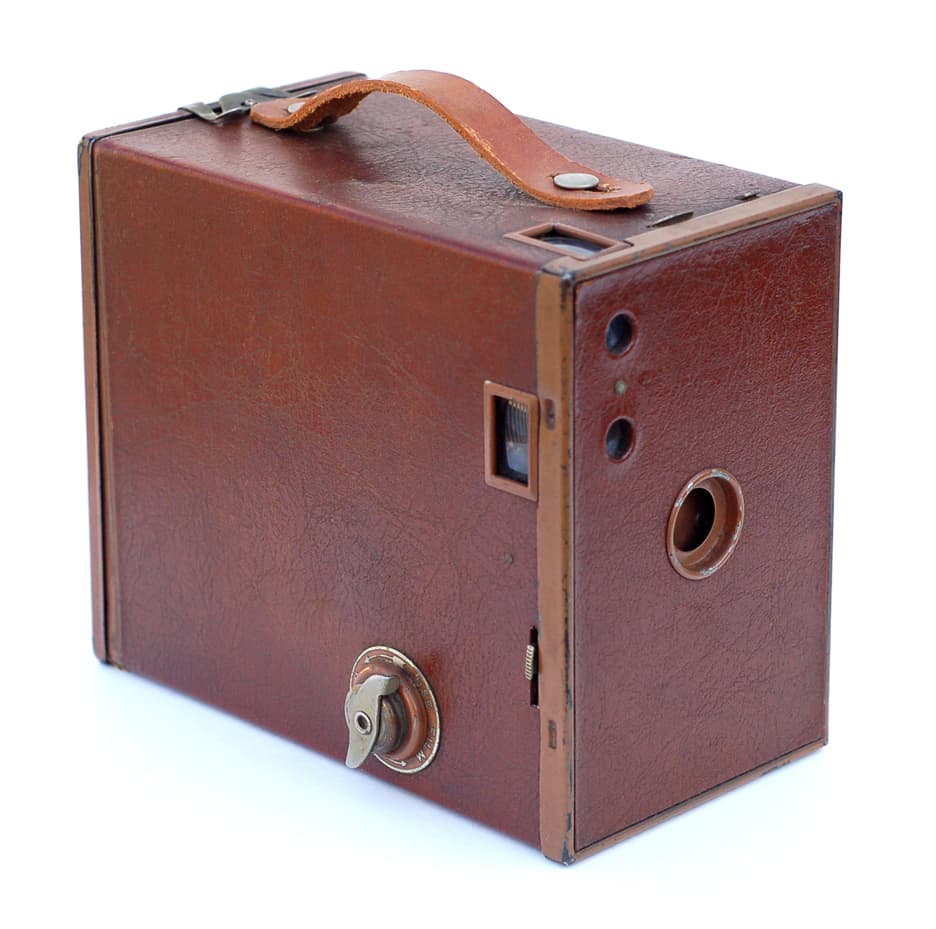
The Kodak Brownie No. 2A is a fixed-focus, fixed-exposure box camera introduced by Eastman Kodak in 1907, designed to shoot 116-format roll film producing 2-1/2 x 4-1/4 inch (roughly 6 x 10.8 cm) negatives. It is a direct enlargement of the original No. 2 Brownie, scaled up to accommodate the wider 116 film spool and produce a more panoramic frame suitable for outdoor group shots and landscapes.
Reference
Recommended film stocks for the — format your camera takes.
C41
Lomography Color Negative 400 is a versatile ISO 400 C-41 color negative film with vivid, saturated colors, believed to be a Kodak Alaris-manufactured emulsion, available in 35mm and 120 formats.
View profileC41
Lomography Color Negative 800 is a high-speed ISO 800 C-41 color negative film widely suspected to be a Kodak-manufactured emulsion, delivering vibrant colors and adequate grain for challenging lighting conditions.
View profileC41
Develop — film
We're growing the lab directory near you. Browse all labs.
Before you buy used
About this camera
The cardboard box camera that made panoramic-format snapshot photography affordable for Edwardian families.
| Field | Value |
|---|
| Format | 116 film, ~6 x 10.8 cm (6 exposures per roll) |
| Mount | Fixed (non-interchangeable) |
| Years | 1907-1933 |
| Lens | Single meniscus element, ~100mm equivalent |
| Shutter | Rotary sector: ~1/25s + B |
| Flash sync | None (pre-flash era) |
| Meter | None |
| Focus | Fixed (hyperfocal) |
| Battery | None |
| Viewfinder | Brilliant (reflecting) finder |
Eastman Kodak launched the original Brownie camera in 1900, priced at one dollar, with the explicit aim of putting photography in the hands of children and working families. The No. 2 Brownie followed in 1901, introducing 120 film and 2-1/4 x 3-1/4 inch negatives. The No. 2A was introduced in 1907 to meet demand for a wider, more panoramic frame -- 116 film had been introduced in 1899 and was already familiar to consumers.
The No. 2A was produced in several distinct model runs, identified today primarily by their covering material and art-deco or Edwardian-era decorative detailing. Early models wore a simple plain or marbled leatherette; later versions from the 1920s onward received more refined aluminum top plates and revised viewfinder positions. The camera was discontinued around 1933, by which point the 116 format was already in decline relative to the smaller and lighter 120 and 620 formats.
The 116 film format itself became commercially extinct in the 1980s when Kodak ceased production, making the No. 2A a camera that requires either home-respooled 120 film (with spacers to fill the wider 116 spool) or newly manufactured substitute film from specialty suppliers to shoot today.
The Brownie line, of which the No. 2A was one of the most widely sold variants, fundamentally democratized photography. Before the Brownie, amateur photography required either expensive equipment or a trip to a professional studio. Kodak's mass-market approach -- cheap camera, proprietary film, mail-in processing -- created the snapshot culture that persisted through the twentieth century.
The No. 2A's panoramic 116 format produced images wider than the standard 120-film frame, making it a favorite for family groups, beaches, and garden scenes -- subjects where the extra width was genuinely useful. These wide negatives, when printed or scanned today, have a distinctive elongated aspect ratio that differs from most other film formats and gives period images a particular visual character.
Kodak Gold 200 is a daylight-balanced C-41 color negative film with warm color, moderate grain, and a classic consumer-film look.
C41
Fujifilm Superia X-TRA 400 (marketed as Superia 400 in some regions) is an ISO 400 C-41 consumer color negative film in 135 format, one of Fujifilm's most popular consumer films. It delivers warm, vibrant colors with moderate grain and remains in production in some markets.
View profileC41
Kodak Portra 400 is a professional C-41 color negative film known for flexible exposure latitude, natural skin tones, and fine grain.
View profileBW
Kodak Tri-X 400 is a classic black-and-white film known for strong tonality, visible grain, and documentary character.
View profile