C41
Kodak Portra 400
Kodak Portra 400 is a professional C-41 color negative film known for flexible exposure latitude, natural skin tones, and fine grain.
View profile35mm SLR
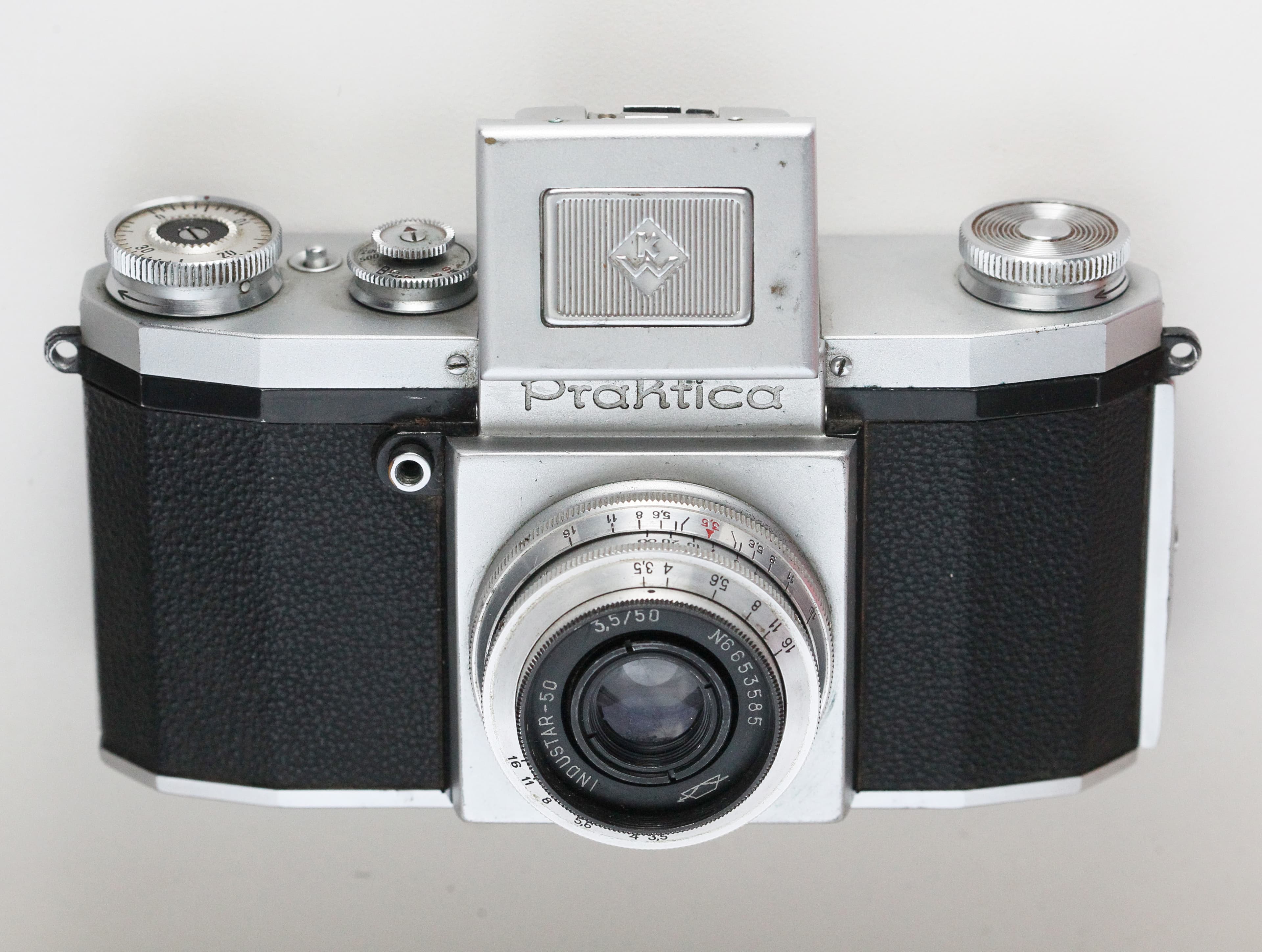
The KW Praktica (1949) is the first camera to carry the Praktica name, produced by Kamera-Werkstätten (KW) in Dresden, East Germany, in the immediate postwar years. It is the direct successor to the KW Praktiflex and represents the transition from the Praktiflex's wartime-era design to a consolidated, rationalized postwar SLR. Like its predecessor, it uses the M42 screw-thread lens mount (42mm diameter, 1mm pitch) and a horizontal cloth focal-plane shutter, and it retains the waist-level ground-glass viewfinder of the Praktiflex rather than adopting an eye-level pentaprism -- that refinement would come later in the line.
Reference
Recommended film stocks for the 35mm format your camera takes.
C41
Kodak Portra 400 is a professional C-41 color negative film known for flexible exposure latitude, natural skin tones, and fine grain.
View profileBW
Kodak Tri-X 400 is a classic black-and-white film known for strong tonality, visible grain, and documentary character.
View profileC41
Kodak Gold 200 is a daylight-balanced C-41 color negative film with warm color, moderate grain, and a classic consumer-film look.
Develop 35mm film
Labs in our directory that process 35mm film.
Before you buy used
About this camera
The founding model of East Germany's most prolific SLR line -- the original Praktica of 1949 established the M42 SLR template that millions of cameras would follow.
| Field | Value |
|---|
| Format | 35mm (24x36 mm) |
| Mount | M42 (42x1mm screw thread) |
| Years | ~1949 – ~1952 |
| Shutter | Horizontal cloth focal-plane: ~1/25s – 1/500s + B |
| Flash sync | ~ (unverified on earliest bodies) |
| Meter | None |
| Exposure | Manual |
| Viewfinder | Waist-level ground glass |
| Focus | Manual, ground glass |
| Battery | None |
After World War II, Dresden's camera industry was reorganized under Soviet occupation and subsequently under the German Democratic Republic. KW resumed production in the late 1940s, building on the Praktiflex design and experience. The Praktica name appears on cameras from approximately 1949 and represents KW's postwar SLR line identity. The "Praktica" spelling -- derived from "praktisch" (practical, in German) -- signaled an intent to position the camera as a workhorse tool rather than a precision instrument in the Leica or Contax mode.
The original Praktica body design is closely related to the Praktiflex FX: it retains the waist-level finder, horizontal cloth shutter, and M42 mount. The coupled shutter-cocking mechanism standardized across postwar Praktica models eliminated the need for the separate cocking step that characterized very early Praktiflex bodies. In 1952--1953, the Praktica FX introduced eye-level flash synchronization and incremental refinements, and subsequent model letters accumulated through the 1950s into the 1960s.
KW was eventually merged into VEB Pentacon (later Pentacon Dresden) as part of East German industrial consolidation, and the Praktica brand continued under Pentacon through the 1970s and 1980s, producing cameras in the M42-mount Praktica L/MTL/BX series. The original no-suffix Praktica of 1949 thus stands at the root of one of the longest-running camera lines in history.
The original Praktica established the framework that hundreds of thousands -- eventually millions -- of M42-mount SLRs would follow. By committing to the M42 screw thread as a shared standard across the Dresden photographic industry, KW created the conditions under which Carl Zeiss Jena, Meyer-Optik Görlitz, and later Pentax, Fujinon, Mamiya, and scores of independent lens makers all produced M42 glass. The resulting ecosystem of affordable M42 lenses remains one of the richest sources of adapted manual glass for mirrorless digital cameras today.
The original Praktica is not the camera that made the line famous -- the Praktica L series of the 1970s did that, by reaching price points that made 35mm SLR photography accessible to students and amateurs across Europe. But without the 1949 founding model's commitment to the M42 standard and to a rational, manufacturable body design, the later line would not have had its foundation.
The M42 mount accepts any M42-thread lens regardless of manufacturer. Contemporary lenses for the original Praktica included:
The waist-level viewfinder is fixed and not interchangeable on the original Praktica. Pentaprism finders became available on later Praktica FX bodies.
C41
Fujifilm Superia X-TRA 400 (marketed as Superia 400 in some regions) is an ISO 400 C-41 consumer color negative film in 135 format, one of Fujifilm's most popular consumer films. It delivers warm, vibrant colors with moderate grain and remains in production in some markets.
View profileBW
Ilford HP5 Plus is a flexible ISO 400 black-and-white film with classic grain and strong push-processing tolerance.
View profileC41
Kodak Ektar 100 is a fine-grain C-41 color negative film with saturated color and high sharpness.
View profile