C41
Kodak Portra 400
Kodak Portra 400 is a professional C-41 color negative film known for flexible exposure latitude, natural skin tones, and fine grain.
View profile35mm SLR
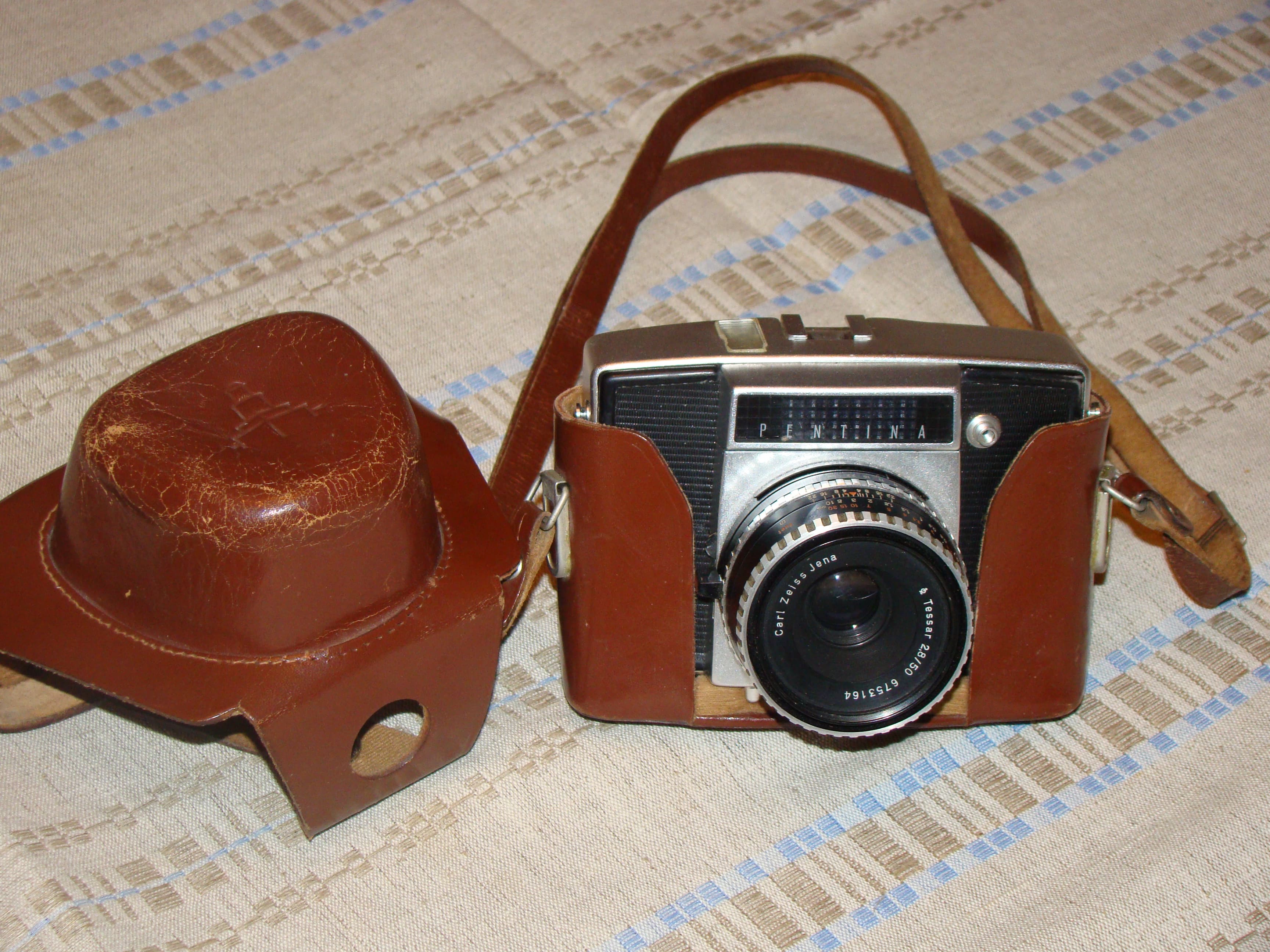
The KW Pentina is a 35mm single-lens reflex camera produced by KW (Kamera-Werkstatten) in Dresden, East Germany, introduced in 1961. It represents a technically distinct approach within the East German SLR tradition: rather than the focal-plane shutter used by all Praktica models, the Pentina integrates the shutter within the lens itself - a between-the-lens (interlens) leaf shutter. This design offers complete flash synchronisation at all shutter speeds, including the maximum 1/500s, which no focal-plane shutter camera of the era could match.
Reference
Recommended film stocks for the 35mm format your camera takes.
C41
Kodak Portra 400 is a professional C-41 color negative film known for flexible exposure latitude, natural skin tones, and fine grain.
View profileBW
Kodak Tri-X 400 is a classic black-and-white film known for strong tonality, visible grain, and documentary character.
View profileC41
Kodak Gold 200 is a daylight-balanced C-41 color negative film with warm color, moderate grain, and a classic consumer-film look.
Develop 35mm film
Labs in our directory that process 35mm film.
Before you buy used
About this camera
East Germany's leaf-shutter SLR experiment: a 1961 camera that paired a selenium AE system with a between-the-lens shutter to offer full flash sync at all speeds.
| Field | Value |
|---|
| Format | 35mm (24x36 mm) |
| Mount | Pentina bayonet (leaf-shutter-in-lens, proprietary) |
| Years | ~1961 |
| Shutter | Leaf (in lens): 1s - 1/500s + B |
| Flash sync | 1/500s at all speeds |
| Meter | Selenium, coupled AE |
| Exposure | Auto (selenium AE) or manual |
| Viewfinder | Pentaprism |
| Focus | Manual, split-prism |
| Battery | None required |
KW (Kamera-Werkstatten) had been producing cameras in Dresden since the 1920s and was one of the original East German optical firms absorbed into the VEB structure after 1945. The company produced the Praktiflex and the early Praktica SLRs before being consolidated into VEB Pentacon in the early 1960s.
The Pentina was introduced in 1961 at a moment when the leaf-shutter SLR concept was receiving serious engineering attention across the industry. Zeiss Ikon's Contaflex, Voigtlander's Bessamatic, and Kodak's Retina Reflex were all attempting to combine the SLR's through-the-lens viewing with the leaf shutter's flash advantages. KW's Pentina was East Germany's entry into this contest, engineered with a proprietary mount to ensure lens supply remained within the state-owned optical industry.
Production was relatively limited, and the Pentina did not achieve the export volumes of the concurrent Praktica focal-plane SLRs. By the mid-1960s, the focal-plane shutter approach had become dominant, and development of the Pentina line was discontinued without a major successor. A variant, the Pentina M, was produced with minor changes.
The Pentina is significant as the only East German leaf-shutter SLR to reach series production. It demonstrates that VEB Pentacon's engineers were engaged with the same technical problems preoccupying Zeiss Ikon, Voigtlander, and Kodak in West Germany during the early 1960s - namely, how to give an SLR the flash-sync advantages of a leaf shutter without abandoning through-the-lens viewing. The camera's failure to establish a market position illustrates the structural problem that defeated all leaf-shutter SLRs: the proprietary lens mount created a bottleneck that the focal-plane M42 cameras - with their massive shared lens ecosystem - easily outcompeted.
Today the Pentina is collected primarily as a curiosity of East German optical history and as an example of the brief, worldwide leaf-shutter-SLR moment of the late 1950s to early 1960s.
The Pentina bayonet mount is proprietary and lenses are scarce. Known native lenses: Carl Zeiss Jena Tessar 50mm (standard), possibly a short tele and a wide-angle. The mount is not adaptable to M42 glass without significant mechanical modification; conversely, Pentina-mount lenses cannot readily be adapted to other bodies. This scarcity makes a complete Pentina outfit with more than one lens rare and relatively expensive for what is otherwise a modest camera.
C41
Fujifilm Superia X-TRA 400 (marketed as Superia 400 in some regions) is an ISO 400 C-41 consumer color negative film in 135 format, one of Fujifilm's most popular consumer films. It delivers warm, vibrant colors with moderate grain and remains in production in some markets.
View profileBW
Ilford HP5 Plus is a flexible ISO 400 black-and-white film with classic grain and strong push-processing tolerance.
View profileC41
Kodak Ektar 100 is a fine-grain C-41 color negative film with saturated color and high sharpness.
View profile