C41
Kodak Portra 400
Kodak Portra 400 is a professional C-41 color negative film known for flexible exposure latitude, natural skin tones, and fine grain.
View profile35mm SLR
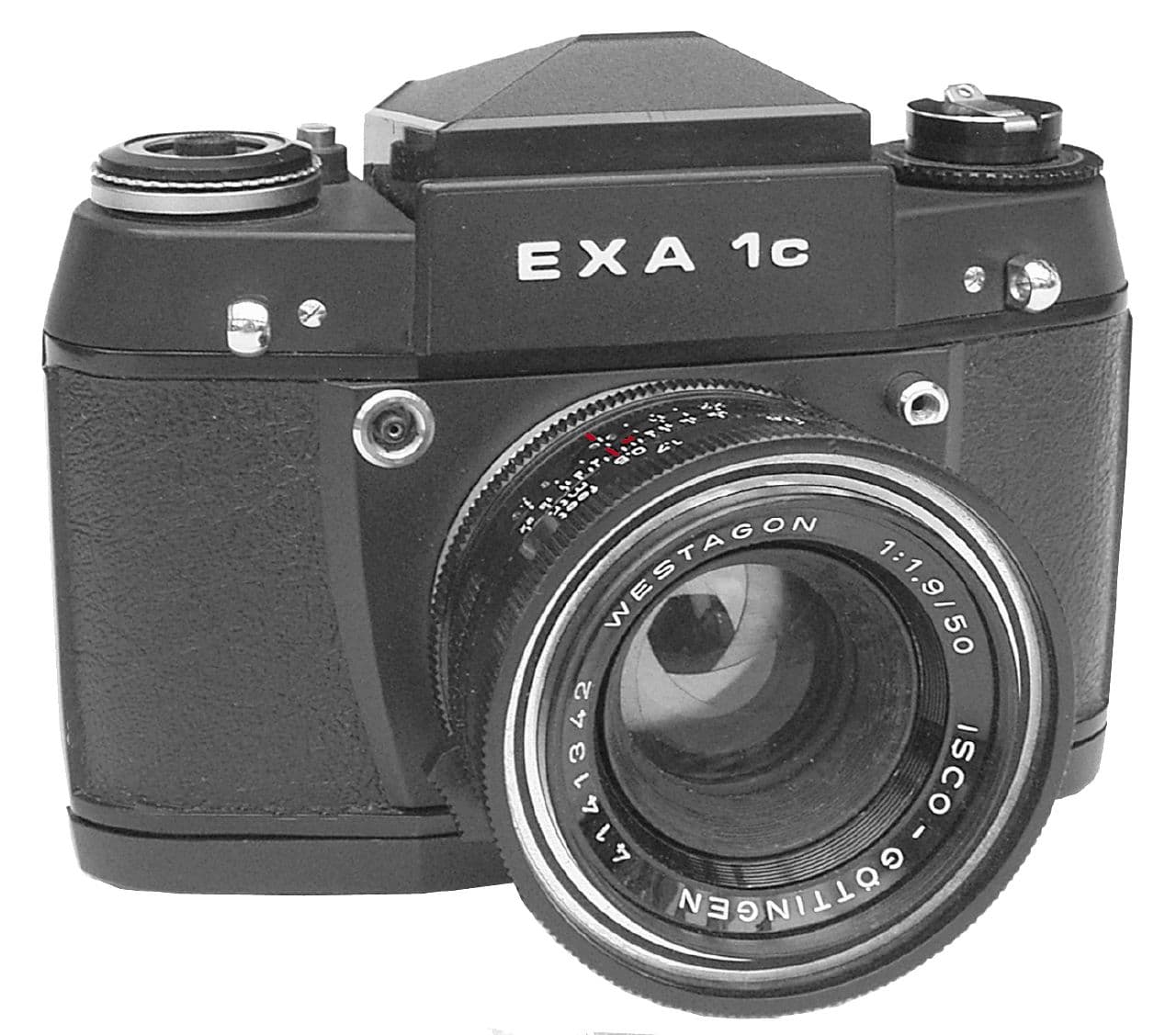
The Ihagee Exa 1c (1964) is a 35mm single-lens reflex camera produced in Dresden, East Germany, representing the third revision of the Exa 1 series — the budget tier of Ihagee's Exakta-mount SLR family. Introduced in 1964 and produced through 1972, the Exa 1c updated the Exa 1b with the addition of a hot-shoe accessory foot on the prism housing, allowing direct attachment of a flashgun without a sync cord.
Reference
Recommended film stocks for the 35mm format your camera takes.
C41
Kodak Portra 400 is a professional C-41 color negative film known for flexible exposure latitude, natural skin tones, and fine grain.
View profileBW
Kodak Tri-X 400 is a classic black-and-white film known for strong tonality, visible grain, and documentary character.
View profileC41
Kodak Gold 200 is a daylight-balanced C-41 color negative film with warm color, moderate grain, and a classic consumer-film look.
Develop 35mm film
Labs in our directory that process 35mm film.
Before you buy used
About this camera
The budget Exakta-family SLR refined to its final accessible form — the Exa 1c brought a fixed pentaprism, an accessory shoe, and Exakta-mount compatibility to photographers who couldn't stretch to a full Varex body.
| Field | Value |
|---|
| Format | 35mm (24×36 mm) |
| Mount | Exakta bayonet |
| Years | 1964–1972 |
| Shutter | Rotary sector: 1/25s – 1/175s + B |
| Flash sync | X-sync; 1/25s |
| Meter | None |
| Exposure | Manual |
| Viewfinder | Fixed pentaprism |
| Focus | Manual, ground glass |
| Battery | None |
The Exa was introduced in 1951 as a simplified, lower-cost companion to the Exakta Varex — sharing the mount and much of the lens ecosystem but using a lighter rotary sector shutter mechanism in place of the Varex's full horizontal cloth focal-plane shutter. Early Exa bodies used a waist-level finder; the Exa 1 (1959) introduced a fixed pentaprism to give the camera a more conventional appearance and handling.
The 1c revision (1964) primarily added a cold shoe / accessory shoe to the pentaprism housing — a practical update reflecting the growing popularity of electronic flash in the mid-1960s. Production continued through 1972, overlapping with the transition of the East German camera industry toward the M42-mount Praktica L series.
Later Exa variants (Exa 1d onward) continued refining the design into the 1980s, eventually incorporating M42 mount in some versions. The 1c is considered the most refined of the Exakta-mount Exa generation.
The Exa 1c represents the most accessible entry point into the Exakta lens ecosystem. For collectors and users today, it offers a fully mechanical, battery-free SLR body accepting some of the most celebrated East German glass ever made, at prices that make it one of the most affordable functional film cameras available. The limited shutter speed range (1/25s–1/175s) is the main caveat; within its range, the camera is entirely dependable.
Accepts all Exakta-mount lenses: Carl Zeiss Jena Tessar 50/3.5, Biotar 58/2, Flektogon 35/2.8, Pancolar 50/2; Meyer-Optik Primotar 50/3.5, Oreston 50/1.8, Lydith 30/3.5; Schneider Curtagon 35/2.8. Note the Exakta mount's left-handed bayonet rotation. Accessories: cable release (threaded front socket), PC flash socket, standard hot shoe added on 1c variant.
C41
Fujifilm Superia X-TRA 400 (marketed as Superia 400 in some regions) is an ISO 400 C-41 consumer color negative film in 135 format, one of Fujifilm's most popular consumer films. It delivers warm, vibrant colors with moderate grain and remains in production in some markets.
View profileBW
Ilford HP5 Plus is a flexible ISO 400 black-and-white film with classic grain and strong push-processing tolerance.
View profileC41
Kodak Ektar 100 is a fine-grain C-41 color negative film with saturated color and high sharpness.
View profile