C41
Kodak Portra 400
Kodak Portra 400 is a professional C-41 color negative film known for flexible exposure latitude, natural skin tones, and fine grain.
View profile35mm SLR
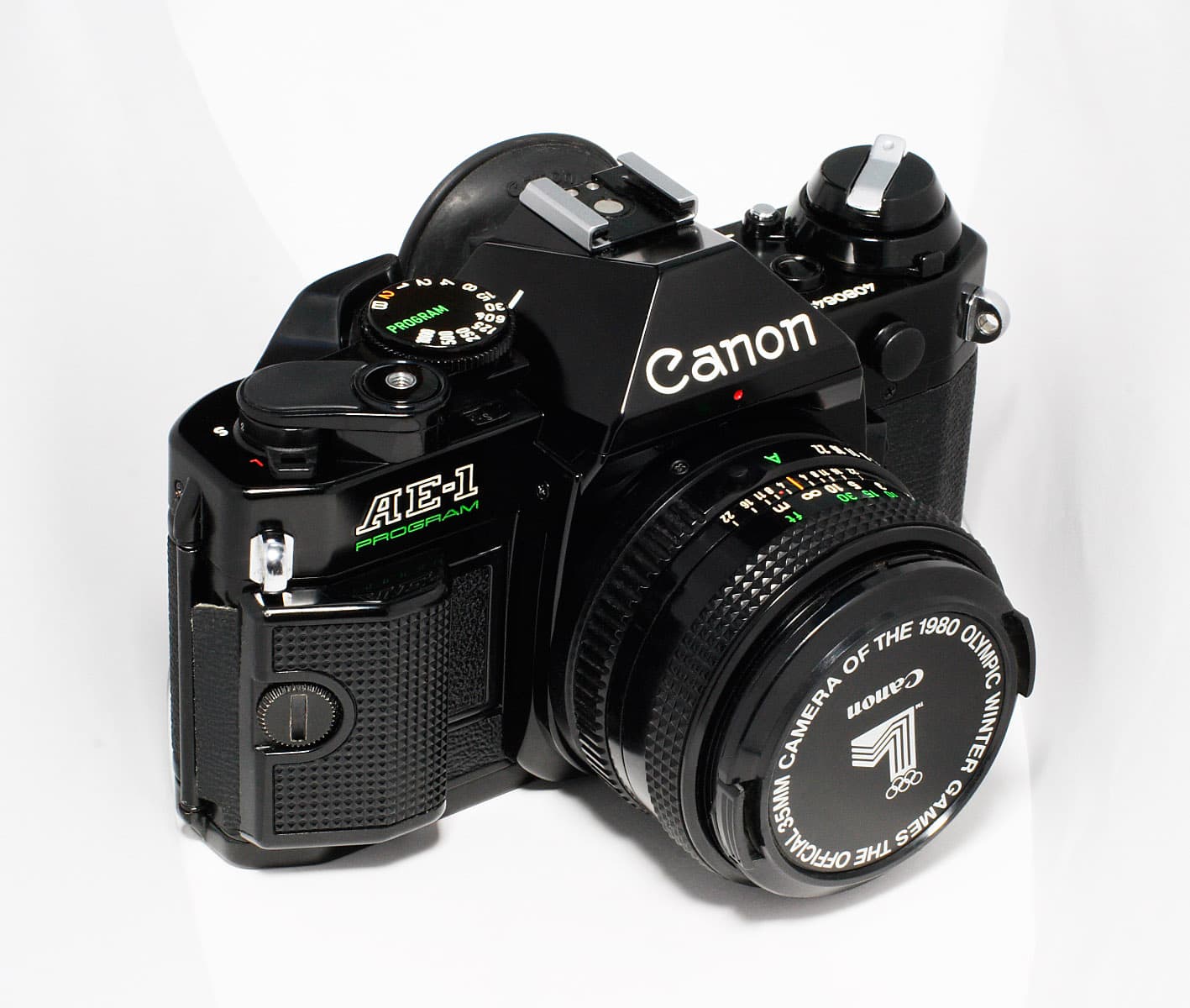
The Canon AE-1 Program (1981) is the direct successor to the AE-1, adding a fully programmed autoexposure mode on top of the existing shutter-priority and manual modes. It uses the same A-series body shell and FD mount but introduced the "DEP" (depth-of-field) and "AE" program mode levers. It also introduced full compatibility with the dedicated Speedlite 277T flash for automatic through-the-lens flash control. Marketed heavily through the same mass-consumer channels as the AE-1, the Program continued Canon's dominance in the amateur SLR segment into the mid-1980s.
Reference
Recommended film stocks for the 35mm format your camera takes.
C41
Kodak Portra 400 is a professional C-41 color negative film known for flexible exposure latitude, natural skin tones, and fine grain.
View profileBW
Kodak Tri-X 400 is a classic black-and-white film known for strong tonality, visible grain, and documentary character.
View profileC41
Kodak Gold 200 is a daylight-balanced C-41 color negative film with warm color, moderate grain, and a classic consumer-film look.
Develop 35mm film
Labs in our directory that process 35mm film.
Before you buy used
About this camera
The AE-1 with a full program mode added - and the last hurrah of the A-series.
| Field | Value |
|---|
| Format | 35mm |
| Mount | Canon FD (FL backwards-compatible without metering) |
| Years | 1981–1987 |
| Shutter | 2s – 1/1000s, electronic horizontal cloth |
| Flash sync | 1/60s |
| Meter | Center-weighted, silicon |
| Exposure modes | Manual, shutter-priority, program |
| Weight | ~570 g |
| Battery | 1x 4LR44 / PX28 (required) |
Canon introduced the AE-1 Program in 1981, five years after the original AE-1. Program AE mode — where the camera selects both shutter speed and aperture — had been popularized by competing bodies in the interim, and the AE-1 Program was Canon's response. A dedicated program mode lever on the camera back engaged the new mode; the lens aperture ring required setting to the "A" position. The camera sold briskly alongside the original AE-1, which remained in production until 1984. Canon discontinued the AE-1 Program in 1987 as the EOS autofocus system (introduced 1987) cannibalized the A-series market.
The AE-1 Program is one of the most commonly found 35mm SLRs on the used market, sharing the AE-1's vast production numbers and distribution footprint. For working with the FD lens ecosystem, it offers the most shooting modes of any A-series Canon - useful for beginners who want the option to hand over the camera to a less experienced shooter in program mode. The body is largely identical to the AE-1 in feel, failure modes, and repair profile.
Canon FD mount. Any FD-mount lens functions with full metering; FL-mount lenses work in stop-down metering mode. Kit pairings: 50/1.8, 50/1.4, 28/2.8, 35-70/3.5-4.5. The "A" aperture detent is required for program and shutter-priority modes. Power Winder A or A2 (2 fps). Speedlite 277T for dedicated TTL flash in program mode. Speedlite 199A for non-TTL use.
C41
Fujifilm Superia X-TRA 400 (marketed as Superia 400 in some regions) is an ISO 400 C-41 consumer color negative film in 135 format, one of Fujifilm's most popular consumer films. It delivers warm, vibrant colors with moderate grain and remains in production in some markets.
View profileBW
Ilford HP5 Plus is a flexible ISO 400 black-and-white film with classic grain and strong push-processing tolerance.
View profileC41
Kodak Ektar 100 is a fine-grain C-41 color negative film with saturated color and high sharpness.
View profile