C41
Kodak Portra 400
Kodak Portra 400 is a professional C-41 color negative film known for flexible exposure latitude, natural skin tones, and fine grain.
View profile35mm Rangefinder
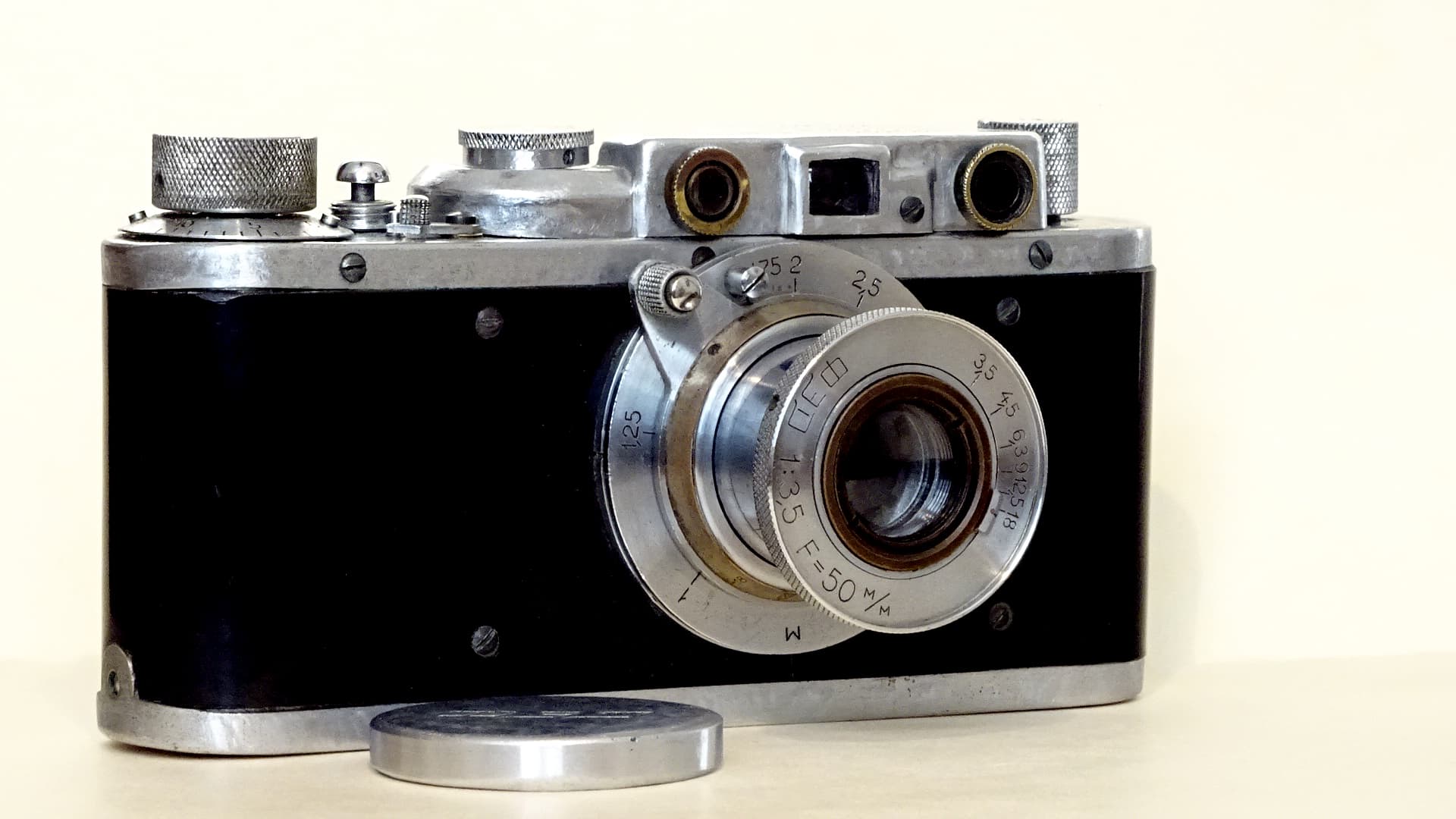
The FED-S (ФЭД-С) is a premium variant of the FED rangefinder camera, produced at the FED factory in Kharkov from approximately 1938. The FED was the Soviet Union's principal Leica-copy camera, derived from the Leica II design and produced at a factory operated by the Dzerzhinsky Labor Commune (a juvenile rehabilitation institution turned industrial enterprise). The "-S" suffix designates the premium configuration, which differed from the standard FED primarily in its lens: the FED-S was fitted with a faster Industar optic at f/2 rather than the standard f/3.5 lens supplied with base models. The camera uses LTM 39mm thread-mount lenses, a mount compatible (with caveats) with Leica screw-mount glass. Surviving FED-S examples are uncommon and the variant is of significant interest to Soviet camera collectors.
Reference
Recommended film stocks for the 35mm format your camera takes.
C41
Kodak Portra 400 is a professional C-41 color negative film known for flexible exposure latitude, natural skin tones, and fine grain.
View profileBW
Ilford HP5 Plus is a flexible ISO 400 black-and-white film with classic grain and strong push-processing tolerance.
View profileBW
Kodak Tri-X 400 is a classic black-and-white film known for strong tonality, visible grain, and documentary character.
Develop 35mm film
Labs in our directory that process 35mm film.
Before you buy used
About this camera
FED's premium 1938 variant: a Soviet Leica-copy rangefinder fitted with the faster f/2 Industar lens.
| Field | Value |
|---|
| Format | 35mm |
| Mount | LTM 39mm (Soviet variant) |
| Years | ~1938 - ~1955 |
| Shutter | ~1/25s - 1/500s + B, mechanical focal-plane cloth |
| Flash sync | None (early production); ~ (later) |
| Meter | None |
| Modes | Manual |
| Weight | ~500 g |
| Battery | None required |
| Viewfinder | Optical with coupled rangefinder |
| Lens (standard) | Industar ~50mm f/2 |
The FED factory was established in the early 1930s as part of the Soviet industrialization drive, taking the Leica II as its direct template. The first FED cameras (now called FED-1 retrospectively) entered production around 1934 and were photographically functional copies of the Leica II, sharing the same thread-mount lens standard and basic operational architecture. Soviet engineers adapted the design to available tooling and materials, and quality varied considerably across production batches.
By the late 1930s, FED had refined its manufacturing sufficiently to produce premium configurations for professional and press use. The FED-S emerged as a special-specification camera, distinguished primarily by the faster f/2 optic - most likely a version of the Industar-10 or a closely related formula. The faster aperture suited indoor and low-light press photography that the standard f/3.5 lens could not cover adequately.
The German invasion of the Soviet Union in 1941 devastated the FED factory in Kharkov; the facility was occupied, damaged, and evacuated. Postwar production resumed but under significantly different organizational conditions, and the FED-S designation does not appear consistently in postwar documentation. Some sources place FED-S production entirely in the prewar period (1938-1941); others indicate continued or resumed production into the early 1950s.
The FED-S sits at the premium end of the prewar Soviet rangefinder spectrum. While the standard FED democratized photography for Soviet workers and press, the FED-S served professionals who needed a faster aperture for news and documentary work - the difference between f/3.5 and f/2 was decisive for indoor, theater, and low-light documentary shooting in the pre-flash era.
The FED line as a whole had a substantial downstream legacy: the Zorki series (produced at KMZ) and the later FED models all trace to the same Leica-copy template that the FED-S represents at its most capable prewar form. The cameras also established LTM 39mm as the standard Soviet rangefinder mount, which ensured partial compatibility with Leica glass and created a lasting ecosystem that Soviet photographers exploited for decades.
The factory's unusual institutional origin - a juvenile labor commune operated under OGPU/NKVD supervision - is a significant historical fact. The FED acronym derives from "Felix Edmundovich Dzerzhinsky," the founder of the Soviet secret police. This history is inseparable from the cameras and is relevant context for understanding the Soviet photographic industry of the 1930s.
The FED-S uses LTM 39mm thread-mount lenses. The standard fitted lens is a fast Industar-type optic; other LTM lenses from Soviet, German, and other manufacturers can be fitted subject to rangefinder coupling and flange distance compatibility.
Accessories:
BW
Fujifilm Neopan 100 Acros is an ultra-fine-grain ISO 100 black-and-white negative film celebrated for its world-class granularity, wide tonal range, and exceptional reciprocity characteristics. The original Acros was discontinued in 2018; Acros II relaunched in November 2019 with a reformulated emulsion and is the current production version.
View profileC41
Kodak Portra 160 is a professional C-41 color negative film with fine grain, soft contrast, and natural color.
View profileC41
Kodak Gold 200 is a daylight-balanced C-41 color negative film with warm color, moderate grain, and a classic consumer-film look.
View profile