C41
Kodak Portra 400
Kodak Portra 400 is a professional C-41 color negative film known for flexible exposure latitude, natural skin tones, and fine grain.
View profile35mm Rangefinder
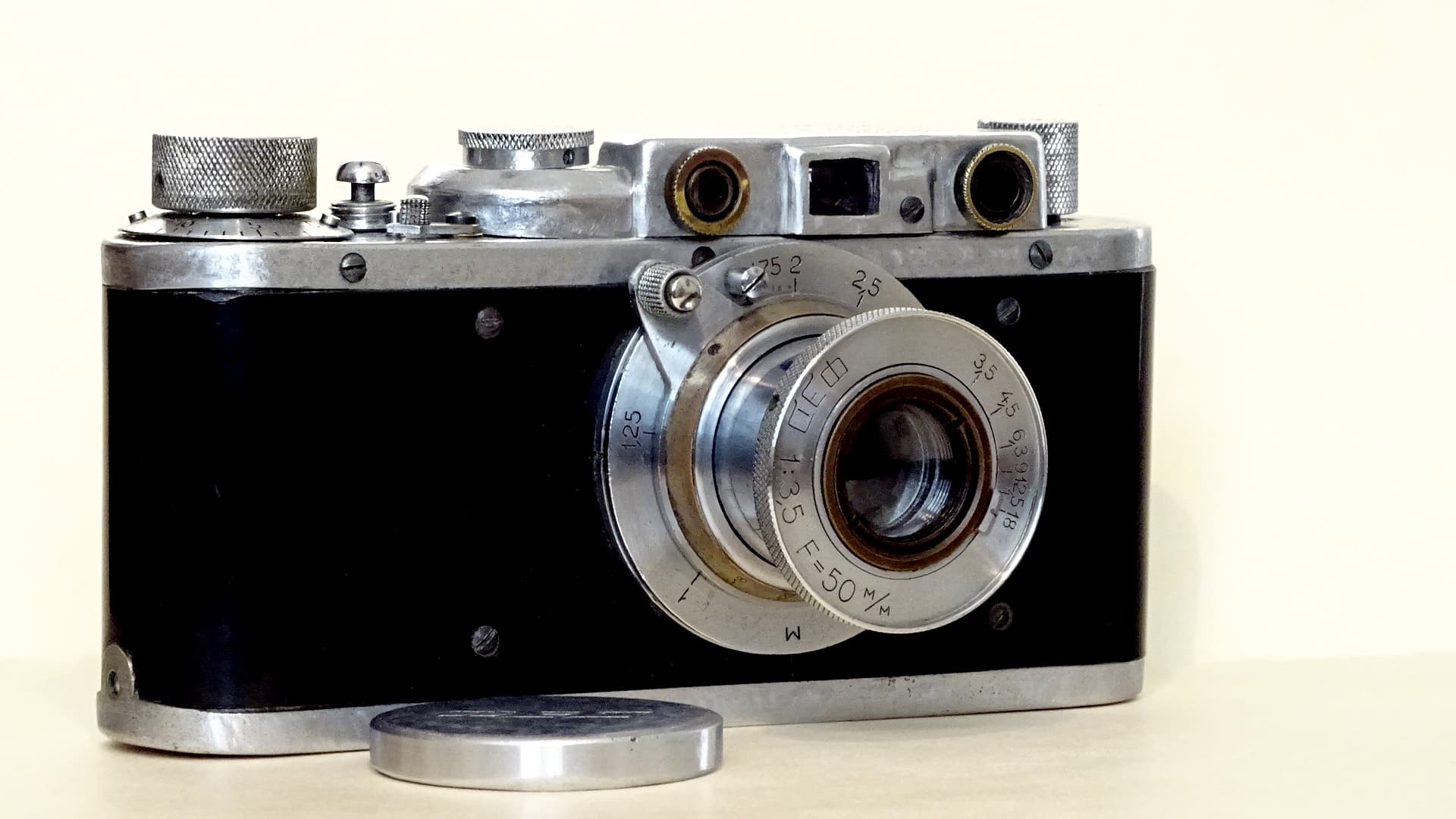
The FED-1c is a transitional production batch of the FED-1 rangefinder, manufactured at the FED factory in Kharkiv, Ukraine around 1955 - the final year of the FED-1 line before the FED-2 superseded it. It retains the same fundamental Leica II-derived architecture (M39 LTM mount, horizontal-cloth focal-plane shutter, bottom-load film loading, combined rangefinder-viewfinder window layout) but reflects incremental manufacturing improvements accumulated over two decades of FED production. The FED-1c designation is used by collectors and researchers to distinguish this late-production batch from earlier FED-1 variants; it is not a formally marketed model name in the Western sense.
Reference
Recommended film stocks for the 35mm format your camera takes.
C41
Kodak Portra 400 is a professional C-41 color negative film known for flexible exposure latitude, natural skin tones, and fine grain.
View profileBW
Ilford HP5 Plus is a flexible ISO 400 black-and-white film with classic grain and strong push-processing tolerance.
View profileBW
Kodak Tri-X 400 is a classic black-and-white film known for strong tonality, visible grain, and documentary character.
Develop 35mm film
Labs in our directory that process 35mm film.
Before you buy used
About this camera
The closing chapter of the FED-1 line: a late-production FED-1 refined just before the FED-2 took over.
| Field | Value |
|---|
| Format | 35mm |
| Mount | M39 / LTM |
| Years | ~1955-1956 |
| Shutter | ~1/25s - 1/500s + B, mechanical horizontal cloth |
| Flash sync | None |
| Meter | None |
| Modes | Manual |
| Weight | ~530 g |
| Battery | None |
The FED factory in Kharkiv started producing Leica II copies in 1934 as part of a labor-commune educational program. Over the subsequent two decades, production quality and tooling improved steadily. By the early 1950s, post-war FED-1 bodies showed tighter tolerances and more consistent finishing compared to pre-war and wartime examples. The FED-1c batch represents approximately the last refinement of this first-generation design before FED engineers introduced the substantially redesigned FED-2 (1955), which replaced the removable base with a hinged back and updated the film-advance mechanism. Some sources treat the transition-era bodies from ~1954-1955 as a distinct sub-variant; the collector shorthand "1c" reflects this distinction. Production of the FED-1 type ended when the FED-2 line was fully tooled up.
For collectors, the FED-1c occupies an interesting position: it has the familiar FED-1 form factor but with the improved build quality of late post-war Soviet manufacturing. Unlike earlier wartime or immediate post-war FED-1 bodies, which can show uneven finishing and sloppy tolerances, late-production FED-1 examples often run more reliably and have sturdier shutter mechanisms. Because the "FED-1c" label is a collector designation rather than an official production marking, condition and serial-number range matter more than the designation itself when evaluating a specific example. Bodies from this era typically carry Industar-22 or Industar-10 collapsible lenses (Soviet derivatives of the Leica Elmar design).
M39 / LTM mount accepts any Leica Thread Mount lens. Typical period pairings:
BW
Fujifilm Neopan 100 Acros is an ultra-fine-grain ISO 100 black-and-white negative film celebrated for its world-class granularity, wide tonal range, and exceptional reciprocity characteristics. The original Acros was discontinued in 2018; Acros II relaunched in November 2019 with a reformulated emulsion and is the current production version.
View profileC41
Kodak Portra 160 is a professional C-41 color negative film with fine grain, soft contrast, and natural color.
View profileC41
Kodak Gold 200 is a daylight-balanced C-41 color negative film with warm color, moderate grain, and a classic consumer-film look.
View profile