C41
Kodak Portra 400
Kodak Portra 400 is a professional C-41 color negative film known for flexible exposure latitude, natural skin tones, and fine grain.
View profile35mm Compact
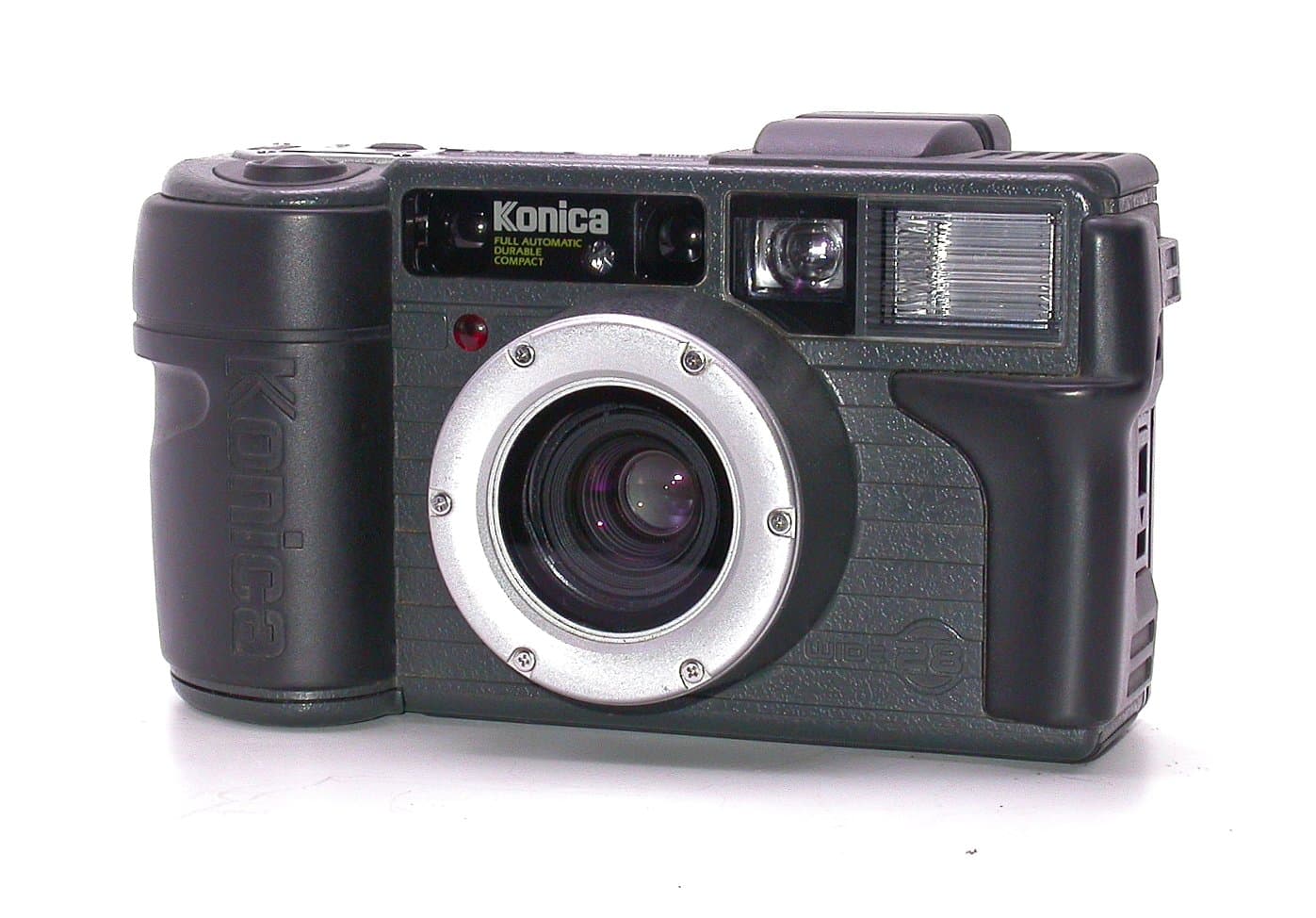
The Konica Genba Kantoku 28HG (1998) is a ruggedized 35mm compact camera built for professional site-documentation use, distinguished from the original Genba Kantoku (1996) by its wider **~28mm Hexanon** lens -- the "28" in the model name -- and "HG" designation indicating a higher-grade specification within the Genba Kantoku line. Like its predecessor, it is enclosed in a thick reinforced polycarbonate shell with rubberized armoring designed to survive drops, construction-site dust, rain splash, and the incidental abuse of daily work-site use.
Reference
Recommended film stocks for the 35mm format your camera takes.
C41
Kodak Portra 400 is a professional C-41 color negative film known for flexible exposure latitude, natural skin tones, and fine grain.
View profileC41
Kodak Gold 200 is a daylight-balanced C-41 color negative film with warm color, moderate grain, and a classic consumer-film look.
View profileC41
Fujifilm Superia X-TRA 400 (marketed as Superia 400 in some regions) is an ISO 400 C-41 consumer color negative film in 135 format, one of Fujifilm's most popular consumer films. It delivers warm, vibrant colors with moderate grain and remains in production in some markets.
Develop 35mm film
Labs in our directory that process 35mm film.
Before you buy used
About this camera
The wide-angle upgrade to Konica's construction-site compact -- 28mm Hexanon, rugged shell, 1998.
| Field | Value |
|---|
| Format | 35mm |
| Lens | ~Hexanon 28mm f/~3.5 (fixed) |
| Year | ~1998 |
| Shutter | ~1/45s - 1/500s, electronic leaf |
| Meter | CdS, programmed auto |
| Modes | Program only |
| Focus | Active autofocus |
| Flash | Built-in |
| Weather resistance | Yes - rain and dust resistant |
| Battery | ~2x AA |
The original Genba Kantoku (1996) established the line's market positioning: a rugged, Japan-domestic compact for tradespeople rather than consumers. The 28HG followed two years later as an upgraded variant, likely responding to user feedback that wider coverage was more useful than the standard ~35mm view in the kinds of tight construction spaces where the camera was typically deployed.
The "HG" designation in Konica's compact line generally indicated a higher-specification or premium variant -- parallel to usage in other Konica model families. The 28HG likely sat above the base Genba Kantoku in the product hierarchy, commanding a modest premium for the wider lens and any additional refinements.
By 1998 Konica's broader compact camera business was consolidating; the Big Mini line served the consumer end, and the Hexar AF served serious photographers. The Genba Kantoku 28HG represents one of the last specialized utility cameras from Konica before the company's merger with Minolta in 2003 and eventual withdrawal from cameras in 2006.
The camera was sold domestically in Japan and does not appear to have been marketed internationally under this name. Export versions, if any were produced, used different branding.
The Genba Kantoku 28HG occupies the intersection of two uncommon qualities in 35mm compact cameras: genuine ruggedization and a wide prime lens. Most weatherproof compacts of the 1990s -- the Olympus Stylus Epic, Nikon Action Touch, Pentax IQZoom 90 WR -- used 35mm or longer lenses and were designed primarily for outdoor recreational photography. The Genba Kantoku 28HG was designed explicitly for the demands of professional site documentation, with the 28mm field of view as a practical tool rather than an aesthetic choice.
For contemporary collectors, the 28HG is more desirable than the standard Genba Kantoku precisely because of the wider lens. The combination of a usable wide prime and meaningful weather resistance is rare in this price tier. Image quality from the ~28mm Hexanon is adequate for documentation and, at smaller apertures in good light, competes with other fixed-lens compacts of the era in center sharpness. Corners will show characteristic wide-angle softness at wider apertures.
As a Japan-domestic model, supply on international markets is limited; most copies reach buyers through Japanese resellers. Condition varies and professional servicing is rarely cost-justified at prevailing prices.
C41
Kodak UltraMax 400 is a versatile consumer-grade ISO 400 daylight-balanced color negative film with T-grain emulsion, delivering warm Kodak colors, fine-for-speed grain (PGI 46), and wide exposure latitude. Currently in production and available globally as a single-roll and multi-pack.
View profileC41
Kodak ColorPlus 200 is an affordable, consumer-oriented daylight-balanced color negative film at ISO 200. Known for warm, slightly muted color rendition, fine grain, and wide exposure latitude, it is currently in production and widely available in Asia and select global markets.
View profileBW
Kodak Tri-X 400 is a classic black-and-white film known for strong tonality, visible grain, and documentary character.
View profile