C41
Kodak Portra 400
Kodak Portra 400 is a professional C-41 color negative film known for flexible exposure latitude, natural skin tones, and fine grain.
View profile35mm Compact
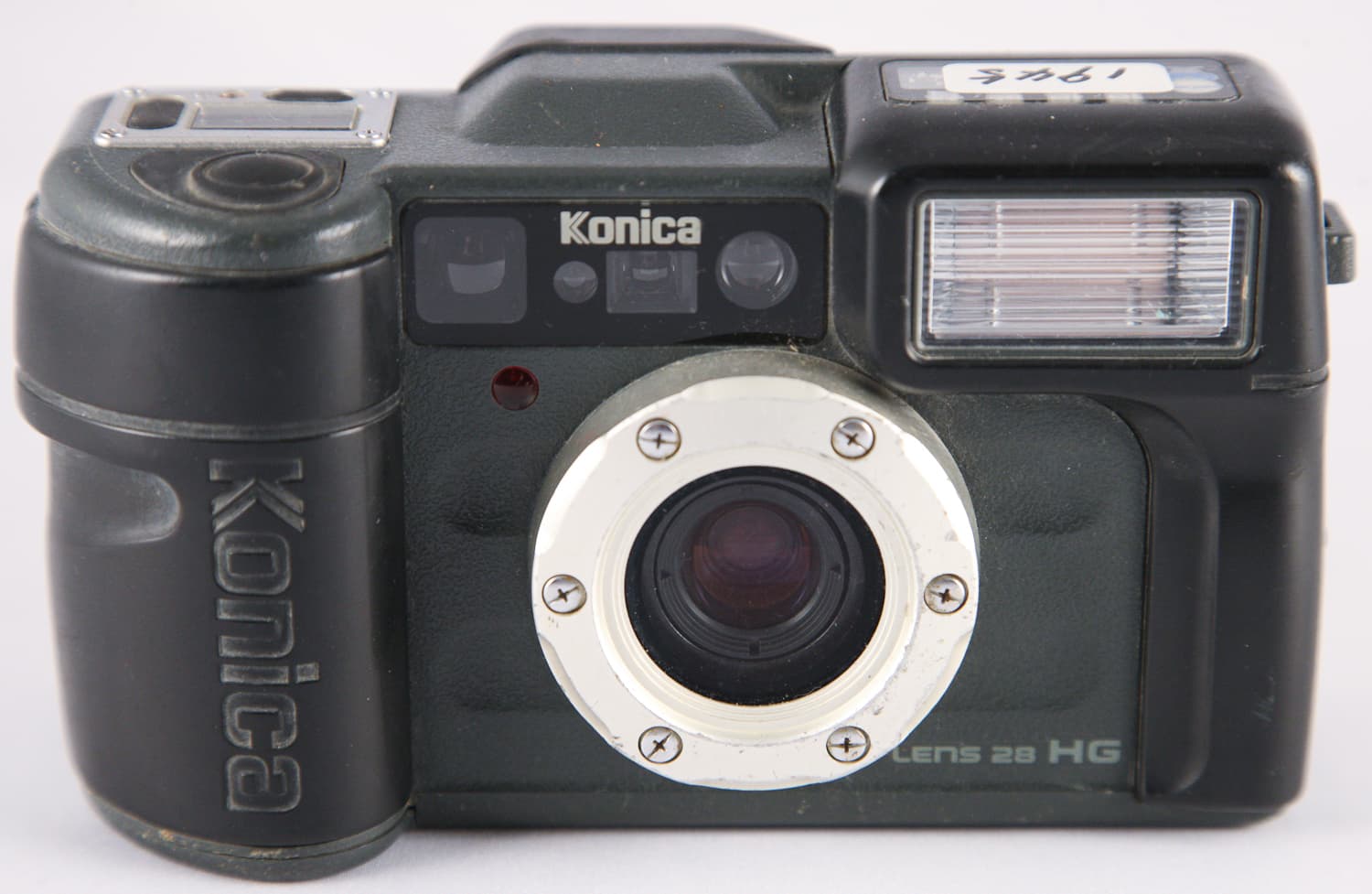
The Konica Genba Kantoku (meaning roughly "site supervisor" or "foreman" in Japanese) is a ruggedized 35mm point-and-shoot compact released by Konica in 1996 for the Japanese domestic market. Unlike most 1990s consumer compacts, which prioritized slimness and style, the Genba Kantoku was explicitly engineered for work-site use: a thick reinforced polycarbonate shell with rubberized armoring designed to absorb drops and resist water, dust, and mud typical of construction environments.
Reference
Recommended film stocks for the 35mm format your camera takes.
C41
Kodak Portra 400 is a professional C-41 color negative film known for flexible exposure latitude, natural skin tones, and fine grain.
View profileC41
Kodak Gold 200 is a daylight-balanced C-41 color negative film with warm color, moderate grain, and a classic consumer-film look.
View profileC41
Fujifilm Superia X-TRA 400 (marketed as Superia 400 in some regions) is an ISO 400 C-41 consumer color negative film in 135 format, one of Fujifilm's most popular consumer films. It delivers warm, vibrant colors with moderate grain and remains in production in some markets.
Develop 35mm film
Labs in our directory that process 35mm film.
Before you buy used
About this camera
Japan-domestic rugged compact built to survive construction sites, rain, and dust.
| Field | Value |
|---|
| Format | 35mm |
| Lens | ~Hexanon 35mm f/4 (fixed focus) |
| Year | 1996 |
| Shutter | ~1/45s - 1/250s, electronic leaf |
| Meter | CdS, programmed auto |
| Modes | Program only |
| Focus | Active autofocus or zone |
| Battery | ~2x AA |
| Flash | Built-in |
| Weather resistance | Yes - rain and dust resistant |
Konica released the Genba Kantoku in the mid-1990s as part of a broader Japanese market trend toward purpose-built "working" cameras aimed at professional tradespeople rather than general consumers. The late bubble-economy and early post-bubble era in Japan produced a range of utility-focused products positioned around reliability and durability rather than fashion. The Genba Kantoku fits this pattern, competing in a niche against similar rugged offerings from other Japanese manufacturers.
The name itself reflects the intended buyer: a genba kantoku (現場監督) is a site supervisor or construction foreman, a common occupation in Japan's infrastructure-heavy 1990s economy. Konica marketed the camera domestically in Japan; export versions, if they existed, used different branding.
The model does not appear to have spawned a direct successor, though Konica's broader rugged compact line continued under other names. Konica's merger with Minolta in 2003 and the eventual withdrawal from cameras in 2006 ended the lineage.
The Genba Kantoku occupies a genuinely unusual niche in 35mm compact history: a professional-tool camera with no photographic pretension. Where cameras like the Olympus Stylus Epic or Konica Big Mini served aesthetes and travelers who wanted a compact that could compete optically with larger cameras, the Genba Kantoku's audience had no interest in bokeh or sharpness tests - they needed a camera that would still function after being dropped in a puddle on a February morning in Sapporo.
For contemporary collectors, that utility-first design makes it a curio. The ruggedized shell and Japan-domestic scarcity keep it uncommon on international used markets. Practically, it is a capable programmed compact for outdoor use where camera survival matters more than ultimate image quality.
C41
Kodak UltraMax 400 is a versatile consumer-grade ISO 400 daylight-balanced color negative film with T-grain emulsion, delivering warm Kodak colors, fine-for-speed grain (PGI 46), and wide exposure latitude. Currently in production and available globally as a single-roll and multi-pack.
View profileC41
Kodak ColorPlus 200 is an affordable, consumer-oriented daylight-balanced color negative film at ISO 200. Known for warm, slightly muted color rendition, fine grain, and wide exposure latitude, it is currently in production and widely available in Asia and select global markets.
View profileBW
Kodak Tri-X 400 is a classic black-and-white film known for strong tonality, visible grain, and documentary character.
View profile