C41
Kodak Portra 400
Kodak Portra 400 is a professional C-41 color negative film known for flexible exposure latitude, natural skin tones, and fine grain.
View profile35mm Compact
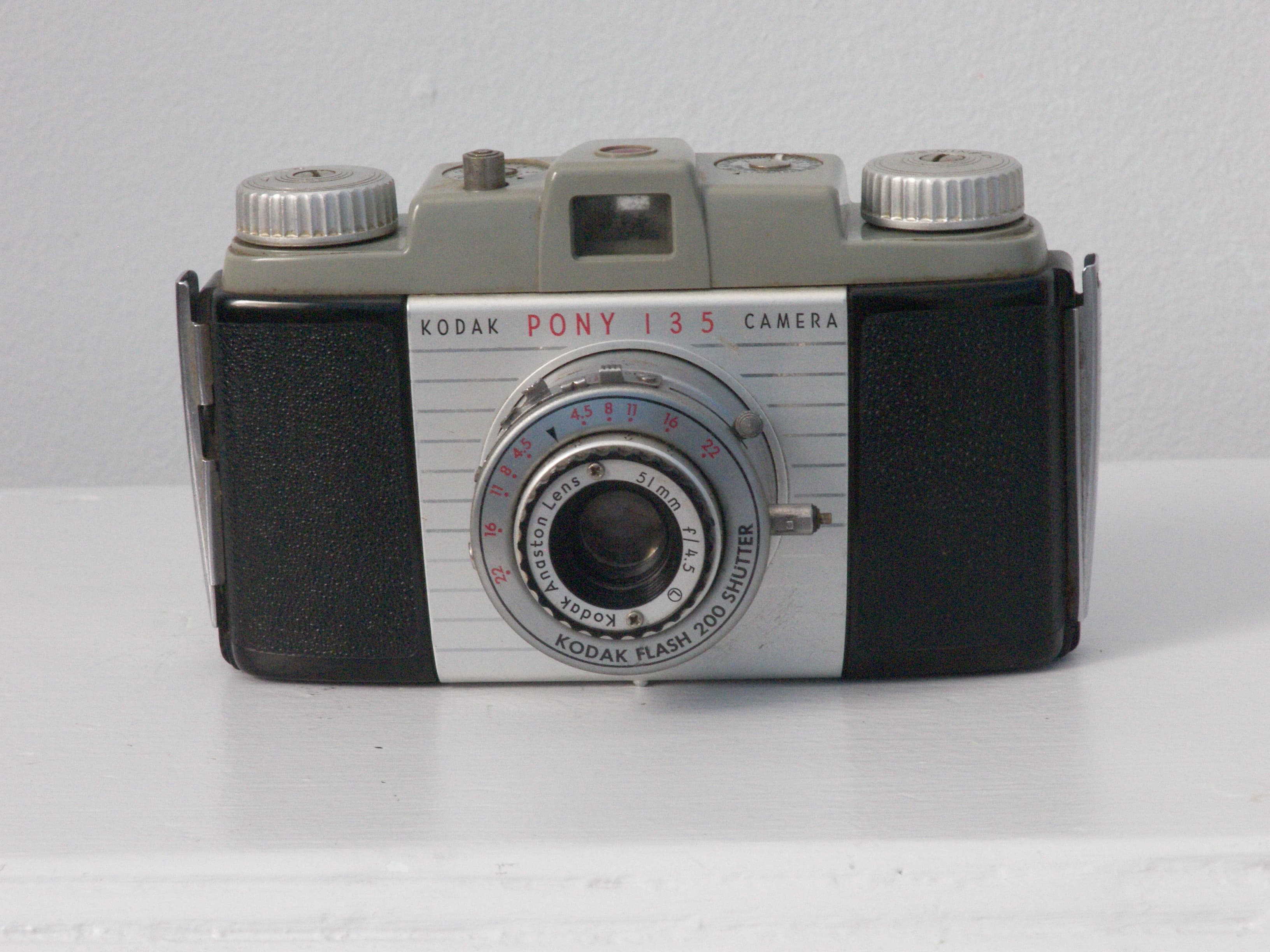
The Kodak Pony 135 (1950) is a compact 35mm viewfinder camera made by Eastman Kodak Company in Rochester, New York, representing Kodak's attempt to democratise 35mm photography for the American consumer market in the postwar era. At a retail price of approximately $27 at introduction — significantly less than contemporary German folding cameras — the Pony 135 positioned 35mm film within reach of middle-income American families.
Reference
Recommended film stocks for the 35mm format your camera takes.
C41
Kodak Portra 400 is a professional C-41 color negative film known for flexible exposure latitude, natural skin tones, and fine grain.
View profileC41
Kodak Gold 200 is a daylight-balanced C-41 color negative film with warm color, moderate grain, and a classic consumer-film look.
View profileC41
Fujifilm Superia X-TRA 400 (marketed as Superia 400 in some regions) is an ISO 400 C-41 consumer color negative film in 135 format, one of Fujifilm's most popular consumer films. It delivers warm, vibrant colors with moderate grain and remains in production in some markets.
Develop 35mm film
Labs in our directory that process 35mm film.
Before you buy used
About this camera
America's affordable 35mm — the Kodak Pony 135 brought 35mm photography within reach of the mass market in the United States, pairing a serviceable Anaston lens with a simple Kodak shutter in a compact American-made body.
| Field | Value |
|---|
| Format | 35mm (24×36 mm) |
| Mount | Fixed (non-interchangeable) |
| Years | 1950–1956 |
| Lens | Anaston 51mm f/4.5 |
| Shutter | Kodak Flash 200 leaf: 1/25s – 1/300s + B |
| Flash sync | M and X sync (on later variants) |
| Meter | None |
| Exposure | Manual |
| Viewfinder | Direct optical |
| Focus | Scale (feet) |
| Battery | None |
Kodak's prewar 35mm cameras — the Retina series — were made in Stuttgart, Germany. The postwar period found Kodak needing an American-made 35mm option that could be priced for the mass market. The Pony 135 was Kodak's answer: a fully domestic product using Kodak's own lens and shutter designs, assembled in Rochester, and sold at department stores and drugstores across the United States.
The Pony name had been used by Kodak for earlier medium-format cameras in the 1930s; the Pony 135 applied it to the 35mm market. Introduced in 1950 at $27.50 (equivalent to roughly $330 in 2026 dollars), the camera was priced to compete with Argus products and entry-level Japanese imports.
The Pony 135 sold well through the early 1950s alongside the flash-capable Brownie Hawkeye. It was replaced by the Pony 135 Model C, which added flash sync improvements, and eventually by the Pony IV (1957) with a slightly faster lens. The line was discontinued as Kodak moved to the fully automatic Brownie and Instamatic platforms in the early 1960s.
The Kodak Pony 135 represents the democratisation of 35mm photography in America — the transition from 35mm as a specialist or enthusiast format to a mainstream consumer film standard. Millions were sold, making it one of the most common American-made 35mm cameras in existence. For collectors, it is an affordable and historically significant piece of American photographic history. For users, it is a fully mechanical camera requiring no battery that can still produce satisfying results in good light.
Fixed Anaston 51mm f/4.5, non-interchangeable. Accessories: Kodak bayonet-fit lens accessories (close-up attachments), Kodak Flasholder bayonet mount for AG-1 flashbulbs, ever-ready case. The Kodak Synchro 300 and Flash 200 shutters vary by production run — check sync socket compatibility before attaching flash.
C41
Kodak UltraMax 400 is a versatile consumer-grade ISO 400 daylight-balanced color negative film with T-grain emulsion, delivering warm Kodak colors, fine-for-speed grain (PGI 46), and wide exposure latitude. Currently in production and available globally as a single-roll and multi-pack.
View profileC41
Kodak ColorPlus 200 is an affordable, consumer-oriented daylight-balanced color negative film at ISO 200. Known for warm, slightly muted color rendition, fine grain, and wide exposure latitude, it is currently in production and widely available in Asia and select global markets.
View profileBW
Kodak Tri-X 400 is a classic black-and-white film known for strong tonality, visible grain, and documentary character.
View profile