C41
Kodak Portra 400
Kodak Portra 400 is a professional C-41 color negative film known for flexible exposure latitude, natural skin tones, and fine grain.
View profile35mm SLR
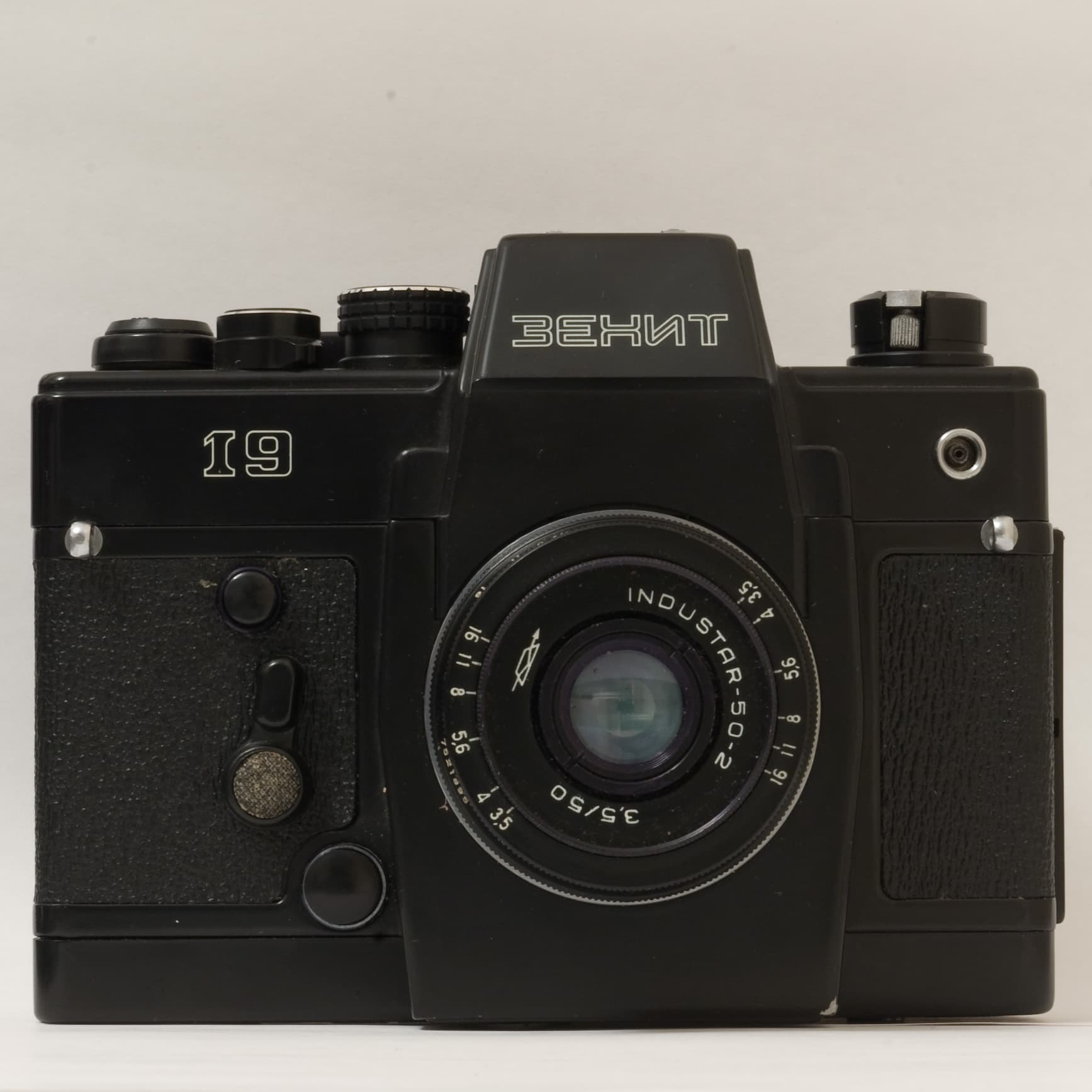
The Zenit-19 is a 35mm single-lens reflex camera produced by KMZ (Krasnogorsky Mekhanichesky Zavod) in Krasnogorsk from around 1979. It was among the most technically advanced cameras produced under the Zenit name, featuring an electronically-controlled horizontal-travel cloth shutter with a speed range from 8 seconds to 1/1000s, TTL center-weighted metering via a silicon cell, and an aperture-priority automatic exposure mode - a genuine rarity in Soviet SLR production. The body is heavy aluminum alloy with a solid, professionally-oriented construction. It accepts M42 screw-mount lenses, placing it in the broad ecosystem of Pentax-thread optics. The Zenit-19 represented KMZ's attempt to field a flagship SLR competitive with contemporary Japanese professional cameras in specification if not in refinement.
Reference
Recommended film stocks for the 35mm format your camera takes.
C41
Kodak Portra 400 is a professional C-41 color negative film known for flexible exposure latitude, natural skin tones, and fine grain.
View profileBW
Kodak Tri-X 400 is a classic black-and-white film known for strong tonality, visible grain, and documentary character.
View profileC41
Kodak Gold 200 is a daylight-balanced C-41 color negative film with warm color, moderate grain, and a classic consumer-film look.
Develop 35mm film
Labs in our directory that process 35mm film.
Before you buy used
About this camera
KMZ's most ambitious Zenit: electronic shutter, aperture priority, and a chassis built to outlast the Soviet Union.
| Field | Value |
|---|
| Format | 35mm |
| Mount | M42 screw |
| Years | ~1979 - ~1984 |
| Shutter | Electronic rubberized-cloth horizontal, 8s - 1/1000s |
| Flash sync | 1/60s |
| Meter | TTL center-weighted, silicon cell |
| Modes | Aperture-priority auto, manual |
| Battery | 4x AA (~6V) |
| Mechanical fallback | None - shutter requires battery |
| Focus | Manual |
| Focus aids | Split-prism, microprism ring, matte field |
| Weight | ~970 g |
KMZ's Zenit line began in 1952 as a derived SLR design based on the Zorki rangefinder body. Through the 1950s and 1960s the Zenit cameras used the M39 and later M42 mounts with mechanically-governed shutters and progressively improved TTL metering. The Zenit-E (1965) established the basic pattern followed by most of the line through the 1970s.
The Zenit-16 and Zenit-19 represented a late push by KMZ to close the specification gap with Japanese SLR manufacturers. The Zenit-19, introduced around 1979, added electronic shutter control and aperture-priority automation - features that had been standard in Japanese mid-range cameras since the early-to-mid 1970s. The electronic shutter required a battery at all times; there was no mechanical fallback speed. Production volumes were lower than the mass-market Zenit-E and Zenit-EM lines; the Zenit-19 was positioned as a professional or enthusiast tool rather than a domestic consumer camera.
Production ended in the early 1980s as KMZ shifted resources. The Zenit-122, a simpler and far more numerous design, became the dominant Zenit of the final Soviet period.
The Zenit-19 is historically interesting as evidence of what KMZ could produce when aiming at the professional segment rather than volume. The electronic shutter offered a genuine 8-second long exposure in automatic mode - useful for low-light work - and the aperture-priority mode with a silicon metering cell was a legitimate modern feature for 1979. The M42 mount provides access to a wide range of Soviet and East German glass: Helios-44 58mm f/2, Jupiter-9 85mm f/2, Carl Zeiss Jena Tessar and Flektogon lenses all fit without adaptation.
The camera was never exported in significant quantities and remains little-known outside collector circles specializing in Soviet cameras. Its heavy body and lack of mechanical fallback make it a less practical shooter than simpler Zenits, but it is the clearest example of KMZ's late-era technical ambition.
The Zenit-19 uses the M42 screw mount (Pentax thread, 42mm x 1mm pitch). Nearly any M42 lens will mount; stop-down metering is required unless the lens has an auto-aperture pin. Notable compatible lenses:
Accessory flash connects via the standard hot shoe and PC sync socket at 1/60s sync speed.
C41
Fujifilm Superia X-TRA 400 (marketed as Superia 400 in some regions) is an ISO 400 C-41 consumer color negative film in 135 format, one of Fujifilm's most popular consumer films. It delivers warm, vibrant colors with moderate grain and remains in production in some markets.
View profileBW
Ilford HP5 Plus is a flexible ISO 400 black-and-white film with classic grain and strong push-processing tolerance.
View profileC41
Kodak Ektar 100 is a fine-grain C-41 color negative film with saturated color and high sharpness.
View profile