C41
Kodak Portra 400
Kodak Portra 400 is a professional C-41 color negative film known for flexible exposure latitude, natural skin tones, and fine grain.
View profile35mm SLR
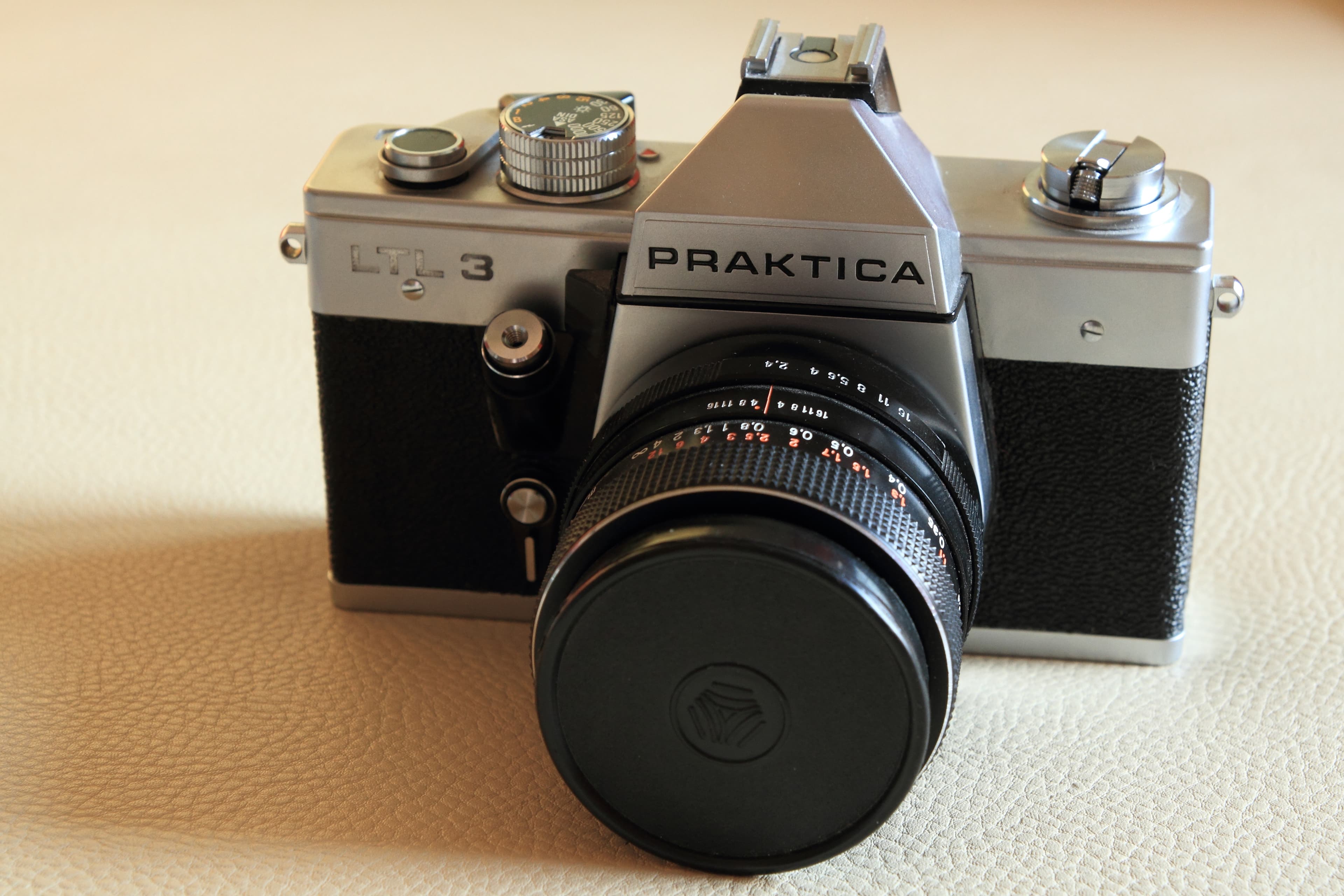
The KW Praktica LTL3 (1978) is a 35mm single-lens reflex camera produced by VEB Pentacon in Dresden, East Germany, representing the third and most refined iteration of the Praktica LTL line within the L-series family. Introduced in 1978 and produced through the mid-1980s, the LTL3 incorporated circuit improvements over the LTL and LTL2, delivering more consistent stopped-down TTL metering performance.
Reference
Recommended film stocks for the 35mm format your camera takes.
C41
Kodak Portra 400 is a professional C-41 color negative film known for flexible exposure latitude, natural skin tones, and fine grain.
View profileBW
Kodak Tri-X 400 is a classic black-and-white film known for strong tonality, visible grain, and documentary character.
View profileC41
Kodak Gold 200 is a daylight-balanced C-41 color negative film with warm color, moderate grain, and a classic consumer-film look.
Develop 35mm film
Labs in our directory that process 35mm film.
Before you buy used
About this camera
The L-series TTL formula refined — the LTL3 updated the original Praktica LTL with an improved metering circuit, a cleaner ergonomic layout, and the same proven vertical metal shutter, representing the mature expression of the affordable M42 TTL SLR from East Germany.
| Field | Value |
|---|
| Format | 35mm (24×36 mm) |
| Mount | M42 screw (42×1mm) |
| Years | 1978–1985 |
| Shutter | Vertical metal focal-plane: 1s – 1/1000s + B |
| Flash sync | 1/125s (X-sync) |
| Meter | CdS TTL stopped-down |
| Exposure | Manual (meter-guided) |
| Viewfinder | Pentaprism, ~92% coverage, 0.88× |
| Focus | Manual, split-prism + microprism |
| Battery | PX625 / SR44 |
The original Praktica LTL (1969) introduced stopped-down TTL metering to the L-series family at a point between the base Praktica L (no meter) and the VLC (open-aperture metering). The LTL proved popular for its combination of affordability and metering capability; the LTL2 and LTL3 followed as incremental refinements maintaining the same basic formula.
By the time the LTL3 arrived in 1978, the Japanese camera industry had broadly abandoned M42 in favour of bayonet mounts, but VEB Pentacon continued to develop and sell M42 bodies into the 1980s, supported by the large installed base of M42 lenses among European photographers and the price advantages of East German manufacturing. The LTL3 and the MTL3 were the primary export earners for Pentacon in this period.
The LTL line was eventually succeeded by the LTL5, which brought minor updates to the circuit and body. By the mid-1980s the Praktica B-mount cameras (BX20, BCA) had become the company's flagship, but the LTL/MTL M42 bodies continued selling in budget and developing markets.
The Praktica LTL3 represents the mature, stable form of the affordable East German M42 TTL SLR — a camera that does everything it promises reliably and without complication. The stopped-down metering workflow, while deliberate, enforces careful exposure thinking and works perfectly with the enormous range of M42 optics available cheaply on the used market. For new film photographers, it offers a complete, battery-operated manual SLR for modest outlay.
Accepts all M42 screw-mount lenses. Premier choices: Carl Zeiss Jena Tessar 50/2.8, Pancolar 50/1.8, Flektogon 35/2.4; Meyer-Optik Oreston 50/1.8, Trioplan 50/2.9; Helios 44-2 58/2; Pentax Super-Takumar 35/3.5, 50/1.4. Third-party: Tamron Adaptall (with M42 adaptor), Vivitar Series 1 M42. Accessories: cable release, PC flash sync, M42 extension tubes for macro.
C41
Fujifilm Superia X-TRA 400 (marketed as Superia 400 in some regions) is an ISO 400 C-41 consumer color negative film in 135 format, one of Fujifilm's most popular consumer films. It delivers warm, vibrant colors with moderate grain and remains in production in some markets.
View profileBW
Ilford HP5 Plus is a flexible ISO 400 black-and-white film with classic grain and strong push-processing tolerance.
View profileC41
Kodak Ektar 100 is a fine-grain C-41 color negative film with saturated color and high sharpness.
View profile