C41
Kodak Portra 400
Kodak Portra 400 is a professional C-41 color negative film known for flexible exposure latitude, natural skin tones, and fine grain.
View profileMedium Format Rangefinder
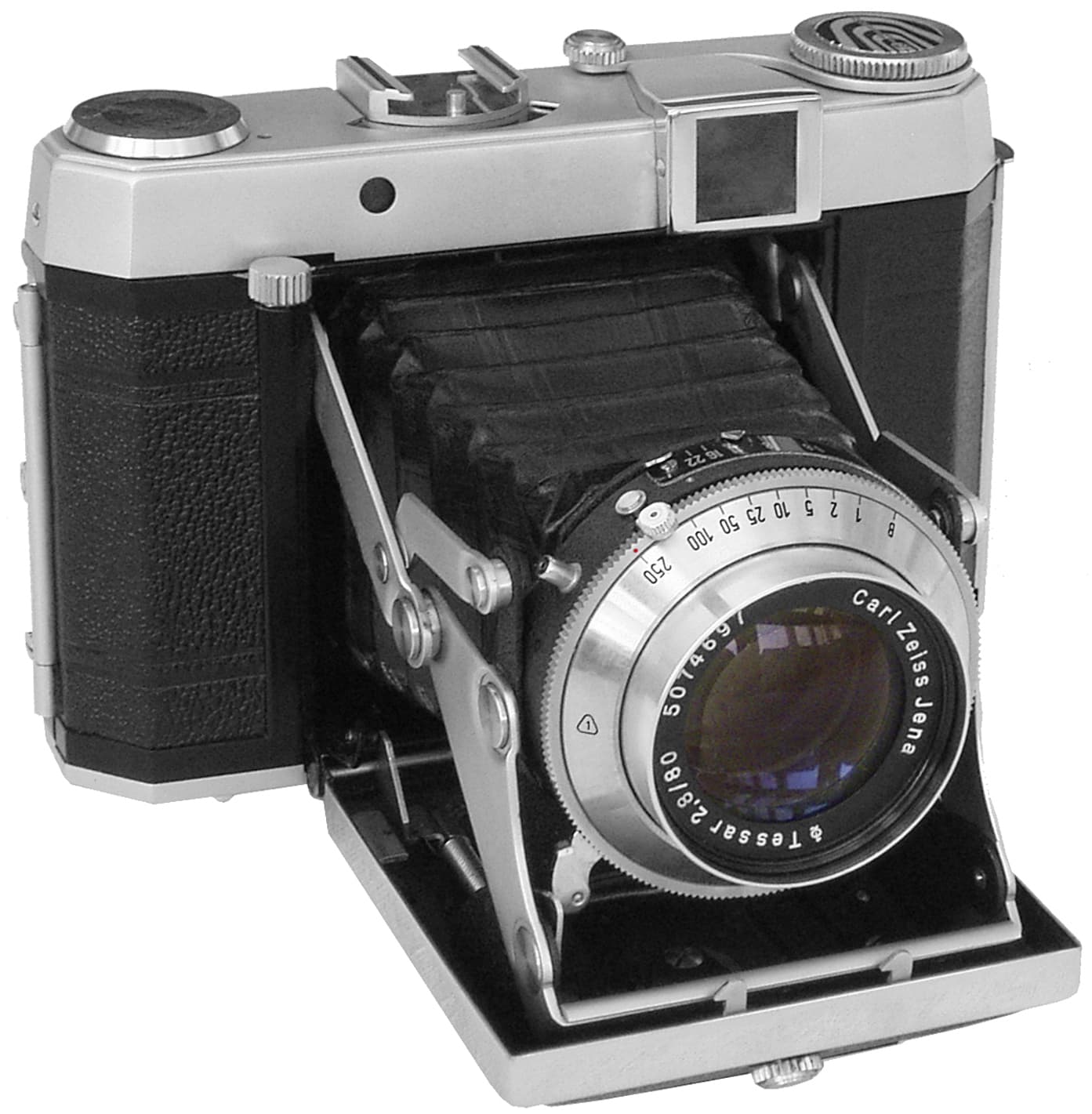
The Certo Six (1948) is a 6×6 medium-format folder produced by Certo Kamerawerk in Dresden, East Germany. It produces 12 exposures per roll on standard 120 film and carries a coupled rangefinder — an unusual feature for cameras in its price class. The standard lens is a Carl Zeiss Jena Tessar 80/2.8 in a Compur or Prontor shutter; some examples carry a Schneider Xenar 80/2.8 or a Steinheil Cassar.
Reference
Recommended film stocks for the — format your camera takes.
C41
Kodak Portra 400 is a professional C-41 color negative film known for flexible exposure latitude, natural skin tones, and fine grain.
View profileC41
Kodak Portra 160 is a professional C-41 color negative film with fine grain, soft contrast, and natural color.
View profileC41
Kodak Ektar 100 is a fine-grain C-41 color negative film with saturated color and high sharpness.
Develop — film
We're growing the lab directory near you. Browse all labs.
Before you buy used
About this camera
An East German folding 6×6 medium-format camera with a coupled rangefinder and Zeiss Jena Tessar optics — modest in price but capable of serious results, and an enduring favourite for restoration projects.
| Field | Value |
|---|
| Format | 6×6 cm on 120 roll film |
| Lens | Tessar 80/2.8 (Carl Zeiss Jena) or Xenar 80/2.8 |
| Years | 1948–1956 |
| Shutter | Compur / Prontor, 1s – 1/500s + B |
| Meter | None |
| Focus | Coupled rangefinder |
| Negatives | 12 per roll (6×6) |
| Weight | ~620 g with lens |
| Battery | None required |
Certo Kamerawerk was established in Dresden in the 1920s and survived the postwar reorganisation of the East German optical industry largely intact. The Certo Six launched in 1948, shortly after production resumed after the war. It was one of several East German manufacturers producing medium-format folders at this time — alongside Welta (Weltur), Balda, and others — and competed on price and the inclusion of the coupled rangefinder.
The Certo Six went through several versions during its production run, with minor changes to shutter type and synchronisation. Production ended around 1956, when the camera market shifted away from medium-format folders toward 35mm cameras. Certo continued producing cameras under various models through the VEB system of East German industry.
The Certo Six has experienced a notable revival among film photography restoration communities. The camera's straightforward mechanical design makes it an approachable CLA target, and a dedicated community at certo6.com documents repair procedures in detail.
The Certo Six represents the democratisation of medium-format rangefinder photography in postwar Europe. At a time when a Zeiss Super Ikonta B or a Rolleiflex TLR was a significant investment, the Certo Six offered coupled-RF accuracy and Zeiss Jena optics at a substantially lower price. The Tessar 80/2.8 is the same fundamental four-element design as the Tessar in the Super Ikonta — manufactured in Jena rather than Oberkochen, but optically equivalent in practice.
For contemporary film photographers, the Certo Six is an attractive entry into coupled-rangefinder medium-format shooting without the premium of Zeiss Ikon or Voigtländer. A restored example with a clean Tessar and accurate RF is capable of producing 6×6 negatives indistinguishable from those of much more expensive cameras.
Fixed non-interchangeable lens. Standard: Tessar 80/2.8 (Carl Zeiss Jena) or Xenar 80/2.8 (Schneider). Some examples carry a Steinheil Cassar 80/2.9. Accessories: push-on filters (step ring to Series VI), cable release, close-up supplementary diopter lenses. No meter mounting is standard; an accessory shoe is present on most versions for a clip-on cold-shoe meter.
E6
Fujifilm Fujichrome Provia 100F (RDPIII) is a professional E6 reversal (slide) film in 135 and 120 formats, known for its natural, balanced color reproduction, very fine grain, and moderate saturation. It remains in production as of 2026 and is one of the last professional slide films available.
View profileBW
Kodak Tri-X 400 is a classic black-and-white film known for strong tonality, visible grain, and documentary character.
View profile