C41
Kodak Portra 400
Kodak Portra 400 is a professional C-41 color negative film known for flexible exposure latitude, natural skin tones, and fine grain.
View profile35mm Rangefinder
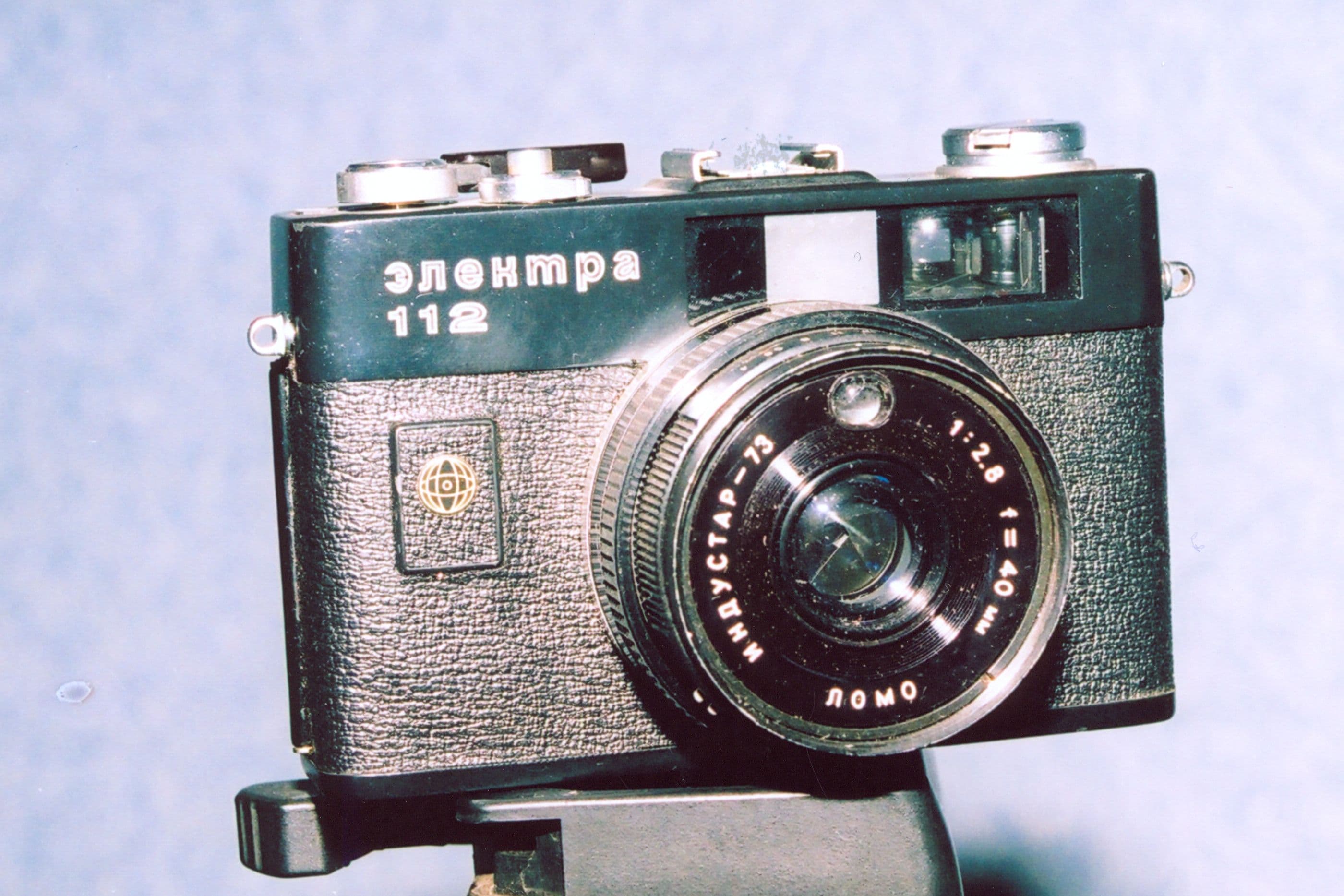
The KMZ Elektra is a 35mm rangefinder compact produced by KMZ (Krasnogorsky Mekhanichesky Zavod) in Krasnogorsk from approximately 1961. It represents a departure from KMZ's dominant product lines of the period - the Zenit SLRs and the Zorki rangefinders - with a fixed-lens compact body that incorporates a coupled rangefinder and a selenium photocell for automatic exposure setting. The camera is unusual in the KMZ catalog: it is neither a prestige rangefinder in the Leica-derived Zorki tradition nor a mass-market Bakelite snapshot camera, but a mid-market design with automatic exposure aimed at amateur photographers who wanted some degree of metering convenience without the complexity or cost of a Zorki with a separate meter. The selenium cell requires no battery, making the camera entirely self-contained.
Reference
Recommended film stocks for the 35mm format your camera takes.
C41
Kodak Portra 400 is a professional C-41 color negative film known for flexible exposure latitude, natural skin tones, and fine grain.
View profileBW
Ilford HP5 Plus is a flexible ISO 400 black-and-white film with classic grain and strong push-processing tolerance.
View profileBW
Kodak Tri-X 400 is a classic black-and-white film known for strong tonality, visible grain, and documentary character.
Develop 35mm film
Labs in our directory that process 35mm film.
Before you buy used
About this camera
A Soviet coupled-rangefinder compact with selenium auto-exposure, an unusual combination for KMZ in the early 1960s.
| Field | Value |
|---|
| Format | 35mm |
| Lens | KMZ fixed lens, ~45mm ~f/2.8 (triplet or tessar-type) |
| Focus | Coupled rangefinder |
| Shutter speeds | ~1/30s - 1/500s + B |
| Flash sync | ~1/30s |
| Meter | Selenium (auto-exposure) |
| Modes | Auto-exposure; manual override ~ |
| Body material | Aluminum, Bakelite trim |
| Weight | ~380 g |
| Battery | None required |
KMZ's primary 35mm products through the late 1950s and early 1960s were the Zorki rangefinder family and the Zenit SLR family. Both lines traced their origins to the 1950 Zorki, itself derived from the pre-war FED, which was a copy of the Leica II. The Elektra was developed outside these established families as a more self-contained consumer product. The integration of a selenium auto-exposure system was broadly in line with what Western manufacturers were doing in the same period - the Agfa Optima of 1959 had introduced fully automatic program exposure, and Japanese makers including Olympus, Yashica, and Canon were producing coupled rangefinder compacts with selenium or CdS metering. The Elektra answered that product segment within Soviet production. It was not produced in large numbers and did not establish a lasting line; KMZ returned to focusing on the Zorki and Zenit families for its subsequent development.
The Elektra is one of the less-documented products in the KMZ catalog precisely because it sits outside the Zorki and Zenit narratives that dominate discussion of the factory's output. As a coupled rangefinder with integrated selenium metering in a compact body, it represents KMZ working in a product format common in Japan and West Germany but unusual for Soviet production. For collectors focused on the breadth of Soviet camera manufacturing rather than the headline models, the Elektra is an interesting edge case: a body that demonstrates KMZ's engineers were aware of and capable of building to contemporary international compact camera specifications, even if the volume production priorities lay elsewhere.
BW
Fujifilm Neopan 100 Acros is an ultra-fine-grain ISO 100 black-and-white negative film celebrated for its world-class granularity, wide tonal range, and exceptional reciprocity characteristics. The original Acros was discontinued in 2018; Acros II relaunched in November 2019 with a reformulated emulsion and is the current production version.
View profileC41
Kodak Portra 160 is a professional C-41 color negative film with fine grain, soft contrast, and natural color.
View profileC41
Kodak Gold 200 is a daylight-balanced C-41 color negative film with warm color, moderate grain, and a classic consumer-film look.
View profile