C41
Kodak Portra 400
Kodak Portra 400 is a professional C-41 color negative film known for flexible exposure latitude, natural skin tones, and fine grain.
View profile35mm Rangefinder
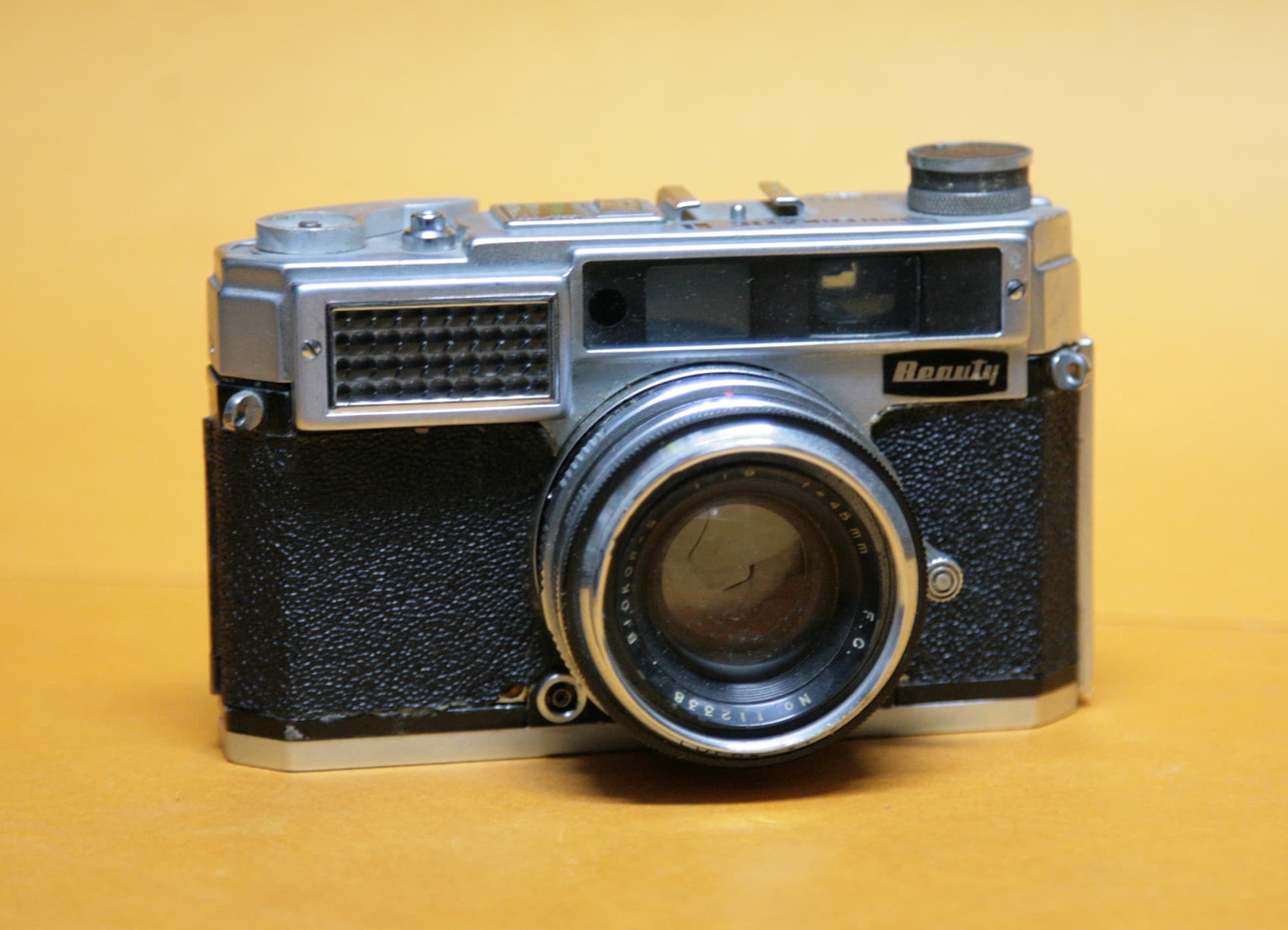
The Beauty Lightomatic (1958) is a 35mm fixed-lens coupled-rangefinder camera produced by Star Corporation (later known as Taiyodo Koki) of Tokyo under the Beauty brand. It is equipped with the Biokor 45mm f/1.9 lens and features a front-mounted selenium exposure meter integrated into a semi-automatic exposure system -- distinguishing it from contemporaries that offered only manual metered exposure.
Reference
Recommended film stocks for the 35mm format your camera takes.
C41
Kodak Portra 400 is a professional C-41 color negative film known for flexible exposure latitude, natural skin tones, and fine grain.
View profileBW
Ilford HP5 Plus is a flexible ISO 400 black-and-white film with classic grain and strong push-processing tolerance.
View profileBW
Kodak Tri-X 400 is a classic black-and-white film known for strong tonality, visible grain, and documentary character.
Develop 35mm film
Labs in our directory that process 35mm film.
Before you buy used
About this camera
A 1958 Japanese fixed-lens rangefinder with selenium auto-exposure and a fast Biokor 45mm f/1.9.
| Field | Value |
|---|
| Format | 35mm (24x36 mm) |
| Mount | Fixed (non-interchangeable) |
| Lens | Biokor 45mm f/1.9 |
| Years | 1958 -- ~ |
| Shutter | Leaf: 1s -- 1/500s, B |
| Meter | Selenium, uncoupled readout, no battery required |
| Exposure | Manual with meter indication |
| Viewfinder | Bright-line with coupled RF patch |
| Focus | Coupled rangefinder |
| Battery | None required |
Star Corporation (operating under the Beauty brand) was one of the smaller Japanese camera manufacturers active during the 1950s and early 1960s. The Beauty marque produced a range of viewfinder and rangefinder cameras, of which the Lightomatic series represented the premium end of the line.
The Lightomatic name was chosen to signal the integrated metering system -- a competitive differentiator in a market where many buyers still relied on separate handheld meters or estimated exposure by rule. In 1958, integrating a selenium meter directly into the camera body and coupling its reading to the exposure system (however loosely) was a genuine convenience advantage.
The Lightomatic was succeeded by later variants including the Lightomatic III, which refined the metering integration and made minor body updates. Beauty cameras generally disappeared from the market in the early 1960s as the major manufacturers consolidated the industry.
The Beauty Lightomatic is a representative example of the competitive depth of the late-1950s Japanese camera industry. Star Corporation was not Canon or Minolta, but produced a functional, competently built camera with a creditable fast lens, integrated metering, and a fully mechanical shutter -- matching the headline specifications of cameras from more prominent brands at a lower price point.
The Biokor f/1.9 lens provides honest fast-lens performance: adequate wide open for available-light work, genuinely sharp from f/2.8 onward. It is not exceptional glass, but it is not dishonest either.
For collectors, the Beauty Lightomatic occupies the "interesting minor player" category of Japanese RF collecting -- cameras from manufacturers that have not survived to be famous, with enough functional distinctiveness to warrant attention beyond pure name recognition.
BW
Fujifilm Neopan 100 Acros is an ultra-fine-grain ISO 100 black-and-white negative film celebrated for its world-class granularity, wide tonal range, and exceptional reciprocity characteristics. The original Acros was discontinued in 2018; Acros II relaunched in November 2019 with a reformulated emulsion and is the current production version.
View profileC41
Kodak Portra 160 is a professional C-41 color negative film with fine grain, soft contrast, and natural color.
View profileC41
Kodak Gold 200 is a daylight-balanced C-41 color negative film with warm color, moderate grain, and a classic consumer-film look.
View profile