C41
Kodak Gold 200
Kodak Gold 200 is a daylight-balanced C-41 color negative film with warm color, moderate grain, and a classic consumer-film look.
View profileHalf-Frame
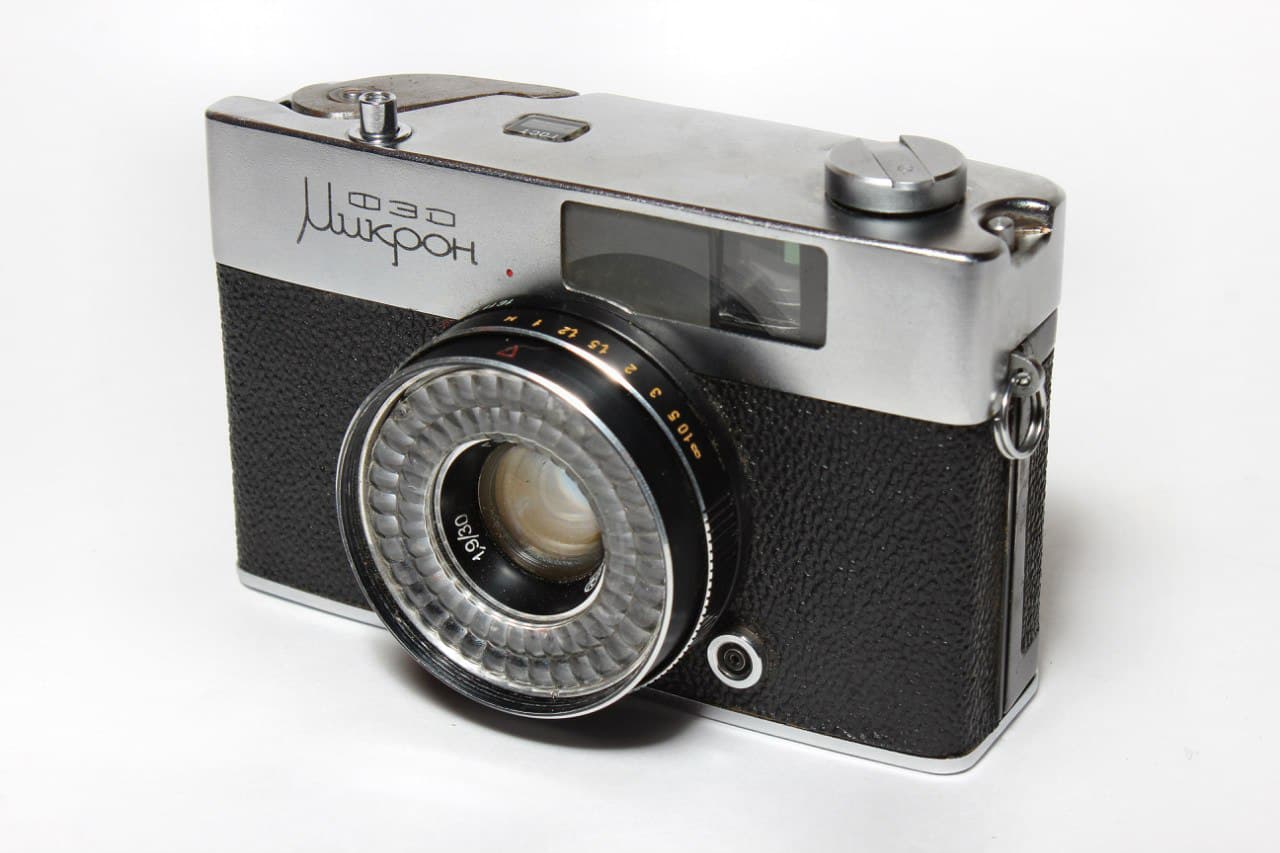
The FED Mikron is a half-frame 35mm camera produced by the FED factory in Kharkiv, Ukrainian SSR, introduced around 1968. It uses standard 35mm cassette film but exposes frames at half the normal 24x36mm size (approximately 18x24mm), doubling the number of exposures per roll. The camera is fitted with an F. Industar 30/2.8 lens - a Soviet design of modest specification suited to the half-frame format - and a central leaf shutter. Exposure is controlled by a selenium photocell coupled to the aperture in an automatic program mode; there is no manual override, placing the Mikron in the same category as the Olympus Pen EE rather than the more capable Pen F system. Zone focus is set by the photographer. The Mikron is a deliberately simple, low-cost camera aimed at casual and student photographers wanting maximum shots per roll.
Reference
Recommended film stocks for the half-frame-35mm format your camera takes.
C41
Kodak Gold 200 is a daylight-balanced C-41 color negative film with warm color, moderate grain, and a classic consumer-film look.
View profileC41
Fujifilm Superia X-TRA 400 (marketed as Superia 400 in some regions) is an ISO 400 C-41 consumer color negative film in 135 format, one of Fujifilm's most popular consumer films. It delivers warm, vibrant colors with moderate grain and remains in production in some markets.
View profileC41
Develop half-frame-35mm film
We're growing the lab directory near you. Browse all labs.
Before you buy used
About this camera
Soviet sub-compact half-frame 35mm camera with automatic selenium exposure - economy meets simplicity.
| Field | Value |
|---|
| Format | Half-frame 35mm (~18x24mm) |
| Lens | F. Industar 30mm f/2.8, fixed |
| Years | ~1968 - ~1975 |
| Shutter | Central leaf, ~1/30s - 1/250s |
| Meter | Selenium auto-exposure (no battery) |
| Modes | Auto-only (program) |
| Focus | Zone focus |
| Viewfinder | Optical brightline |
| Weight | ~230 g |
FED (named for Felix Edmundovich Dzerzhinsky, founder of the Soviet secret police, reflecting the factory's origins in a labor commune) was established in Kharkiv in the 1930s and built its reputation on Leica-copy rangefinder cameras. By the late 1960s, the factory was diversifying its range to address the growing consumer market for simpler cameras. The Mikron emerged from this period as FED's entry into the sub-compact half-frame category, roughly concurrent with Soviet interest in producing cameras that would compete with Japanese mass-market models like the Olympus Pen EE and Ricoh Auto Half. The selenium-cell automatic exposure system required no battery, which was a practical advantage in the Soviet market where compatible batteries were often unavailable. Production ran through the early-to-mid 1970s, succeeded by the FED Mikron 2.
The FED Mikron represents the Soviet half-frame effort during the period when Japanese cameras were defining the category globally. It is more modest in capability than contemporaries like the Olympus Pen FT, lacking interchangeable lenses or manual control, but it is simpler, battery-free (for exposure), and produces 72 frames from a 36-exposure roll. For collectors, it occupies an underrepresented niche in Soviet camera production: FED's history is dominated by Leica-copy rangefinders, making any FED departure from that formula of interest. The Industar 30/2.8 lens, while modest on paper, is capable of sharp results at half-frame scale in good light.
The Mikron uses a fixed F. Industar 30mm f/2.8 lens with no interchangeable mount. The Industar 30 designation refers to the focal length (30mm, suited to the half-frame format's field of view equivalent to approximately 43mm on full-frame 35mm). The lens is a Tessar-type formula with four elements in three groups. No accessories or add-on lenses are known for this camera.
Kodak UltraMax 400 is a versatile consumer-grade ISO 400 daylight-balanced color negative film with T-grain emulsion, delivering warm Kodak colors, fine-for-speed grain (PGI 46), and wide exposure latitude. Currently in production and available globally as a single-roll and multi-pack.
BW
Ilford HP5 Plus is a flexible ISO 400 black-and-white film with classic grain and strong push-processing tolerance.
View profileC41
Kodak Portra 400 is a professional C-41 color negative film known for flexible exposure latitude, natural skin tones, and fine grain.
View profileBW
Kodak Tri-X 400 is a classic black-and-white film known for strong tonality, visible grain, and documentary character.
View profile