C41
Kodak Portra 400
Kodak Portra 400 is a professional C-41 color negative film known for flexible exposure latitude, natural skin tones, and fine grain.
View profile35mm Compact
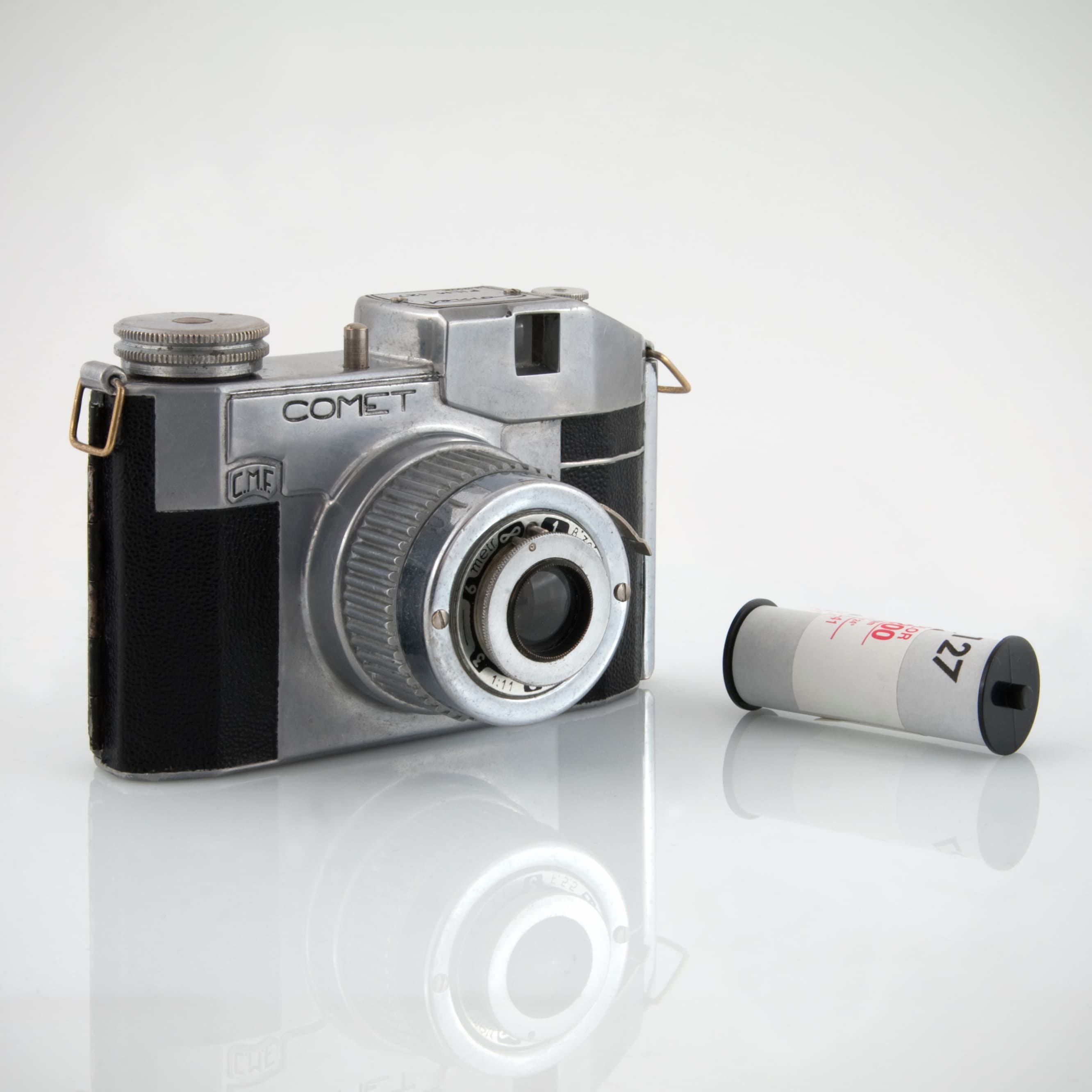
The Bencini Comet is a Bakelite half-frame camera produced by Construzione Macchine Fotografiche (CMF) Bencini of Milan from approximately 1948. It uses 127 roll film and produces a half-frame format image, making it one of the simpler and more affordable Italian cameras of the immediate postwar decade. The Comet was aimed squarely at the mass consumer market - a point-and-shoot design with a fixed-focus lens and a single shutter speed.
Reference
Recommended film stocks for the — format your camera takes.
C41
Kodak Portra 400 is a professional C-41 color negative film known for flexible exposure latitude, natural skin tones, and fine grain.
View profileC41
Kodak Gold 200 is a daylight-balanced C-41 color negative film with warm color, moderate grain, and a classic consumer-film look.
View profileC41
Fujifilm Superia X-TRA 400 (marketed as Superia 400 in some regions) is an ISO 400 C-41 consumer color negative film in 135 format, one of Fujifilm's most popular consumer films. It delivers warm, vibrant colors with moderate grain and remains in production in some markets.
Develop — film
We're growing the lab directory near you. Browse all labs.
Before you buy used
About this camera
A brightly coloured Milanese Bakelite snapshot camera on 127 film - Italy's affordable postwar answer to the box camera.
| Field | Value |
|---|
| Format | 127 (half-frame) |
| Mount | Fixed meniscus or simple lens |
| Year | ~1948 |
| Shutter | Single speed ~1/30s + B |
| Meter | None |
| Focus | Fixed focus |
| Viewfinder | Direct vision optical |
| Battery | None required |
Bencini was founded in Milan in the 1930s and produced a range of modestly priced cameras through the postwar period. The firm operated under the CMF designation and produced several Comet variants alongside other models including the Comet S and the Koroll series. The Comet represented the entry-level end of Bencini's range, while the Koroll cameras offered more conventional full-frame 127 or 120 format operation at a modest step up in price and capability.
Italian camera manufacturing in the immediate postwar period bifurcated sharply between the precision optical ambitions of firms like Galileo and Ferrania's upper-tier products on one hand, and the mass-market Bakelite snapshot camera segment occupied by Bencini on the other. The Comet addressed a genuine consumer need for affordable photography equipment in a period when camera ownership was rapidly expanding across European working and middle-class households.
The specific production years, total units manufactured, and the full range of Comet variants are not well established in English-language references. Multiple Comet models and colour variants appear in collector records, suggesting a production run of several years through the early 1950s.
The Bencini Comet is significant as a representative of mass-market Italian photographic manufacturing in the postwar decade. While Italian precision cameras like the Galileo Condor or the Ferrania RF series attract collector attention for their optical ambition, cameras like the Comet were the products through which most ordinary Italian families first accessed photography.
The Bakelite construction, bold colour options, and snapshot simplicity place the Comet in a tradition of democratic camera design that spans from the Kodak Brownie through to the Olympus Trip 35. Unlike those more celebrated cameras, the Bencini Comet has largely escaped collector premium - it can be found affordably and gives a direct material connection to postwar Italian popular culture.
For collectors, the Comet's interest is primarily historical and contextual. Image quality from the simple lens is limited by modern standards, but the camera's functional simplicity means that working examples are relatively easy to assess and use.
C41
Kodak UltraMax 400 is a versatile consumer-grade ISO 400 daylight-balanced color negative film with T-grain emulsion, delivering warm Kodak colors, fine-for-speed grain (PGI 46), and wide exposure latitude. Currently in production and available globally as a single-roll and multi-pack.
View profileC41
Kodak ColorPlus 200 is an affordable, consumer-oriented daylight-balanced color negative film at ISO 200. Known for warm, slightly muted color rendition, fine grain, and wide exposure latitude, it is currently in production and widely available in Asia and select global markets.
View profileBW
Kodak Tri-X 400 is a classic black-and-white film known for strong tonality, visible grain, and documentary character.
View profile