C41
Kodak Portra 400
Kodak Portra 400 is a professional C-41 color negative film known for flexible exposure latitude, natural skin tones, and fine grain.
View profile35mm Compact
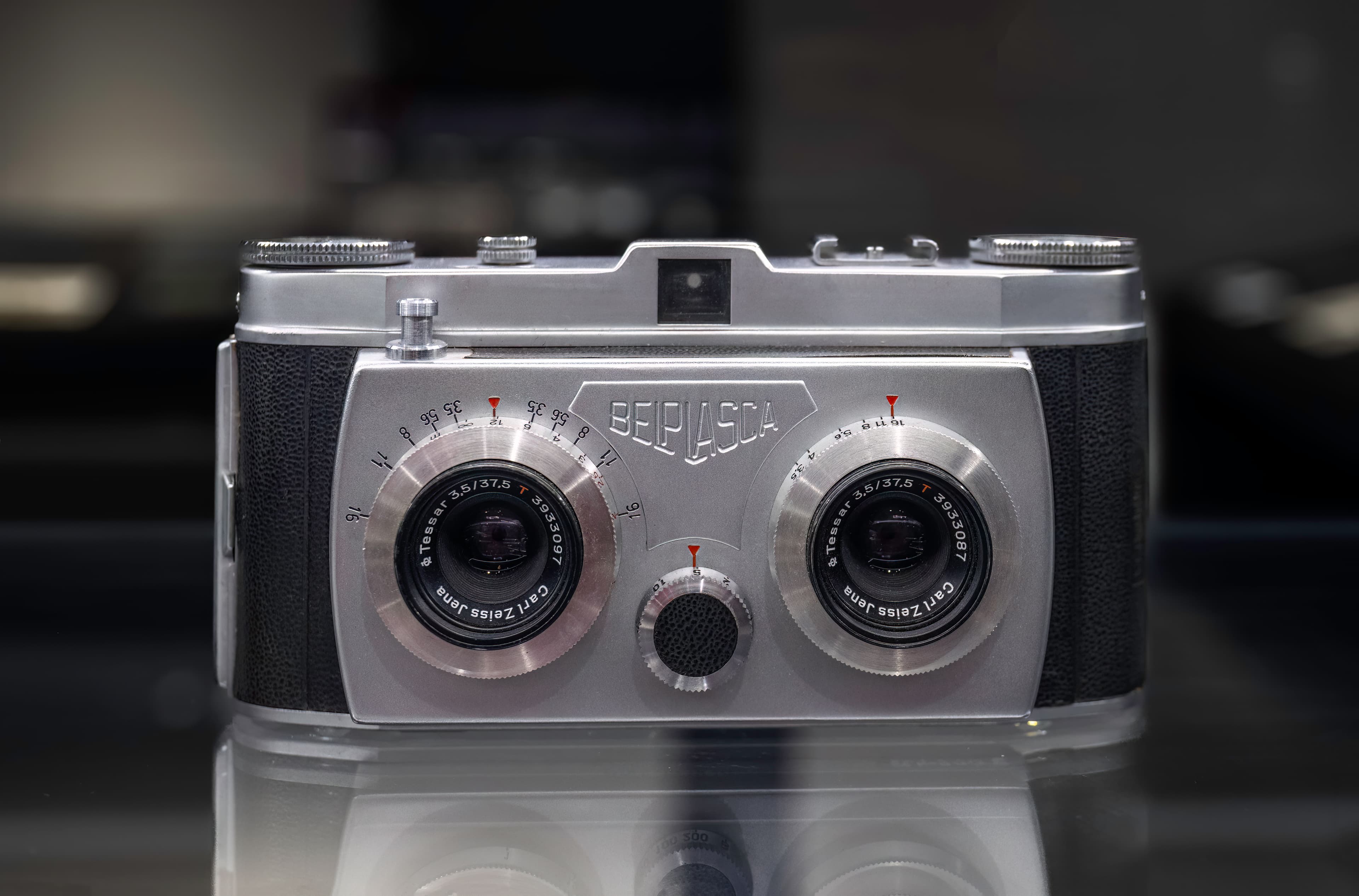
The VEB Belplasca is a 35mm stereo camera manufactured by VEB Belca-Werk in Dresden, East Germany, from approximately 1954 to 1961. It uses two Carl Zeiss Jena Tessar lenses - 37.5mm f/3.5 each - mounted side by side on a single body to capture stereo pairs on standard 35mm film. The camera is fully mechanical, requiring no battery, and uses scale focus. It represents one of the few East German contributions to the 1950s stereo photography boom that was otherwise dominated by American and West German manufacturers.
Reference
Recommended film stocks for the 35mm format your camera takes.
C41
Kodak Portra 400 is a professional C-41 color negative film known for flexible exposure latitude, natural skin tones, and fine grain.
View profileC41
Kodak Gold 200 is a daylight-balanced C-41 color negative film with warm color, moderate grain, and a classic consumer-film look.
View profileC41
Fujifilm Superia X-TRA 400 (marketed as Superia 400 in some regions) is an ISO 400 C-41 consumer color negative film in 135 format, one of Fujifilm's most popular consumer films. It delivers warm, vibrant colors with moderate grain and remains in production in some markets.
Develop 35mm film
Labs in our directory that process 35mm film.
Before you buy used
About this camera
East Germany's answer to the Stereo Realist - twin Zeiss Jena Tessars in a cold-war Bakelite shell.
| Field | Value |
|---|
| Format | 35mm (stereo pairs) |
| Lenses | 2x Carl Zeiss Jena Tessar 37.5mm f/3.5 |
| Years | ~1954-1961 |
| Shutter | Mechanical leaf, 1/25s - 1/200s (~) |
| Modes | Manual |
| Focus | Scale focus |
| Meter | None |
| Battery | None required |
VEB Belca-Werk was a state enterprise (Volkseigener Betrieb) operating in Dresden within the East German optical-industrial complex. The Belplasca was introduced during the brief global peak of stereo photography interest in the early-to-mid 1950s, competing indirectly with the American Stereo Realist and the West German Iloca Stereo. East Germany retained access to the Zeiss Jena optical works after the 1945 division of the Zeiss enterprise, which gave manufacturers like Belca-Werk the ability to fit genuine Zeiss glass even in modestly-priced cameras. Production ended around 1961 as consumer interest in stereo photography declined sharply across all markets.
The Belplasca is significant as a documentation of East German photographic manufacturing at its mid-century peak. The Zeiss Jena Tessar lenses it carries are optically respectable instruments, and the stereo pairs it produces are compatible with standard Stereo Realist-format viewers when formatted correctly. For collectors of cold-war-era photographic equipment or stereo camera enthusiasts, the Belplasca offers genuine Zeiss glass at a price that reflects its obscurity rather than its optical quality. It is considerably rarer on the used market than the Stereo Realist or Iloca Stereo, which were produced in larger quantities for export markets.
C41
Kodak UltraMax 400 is a versatile consumer-grade ISO 400 daylight-balanced color negative film with T-grain emulsion, delivering warm Kodak colors, fine-for-speed grain (PGI 46), and wide exposure latitude. Currently in production and available globally as a single-roll and multi-pack.
View profileC41
Kodak ColorPlus 200 is an affordable, consumer-oriented daylight-balanced color negative film at ISO 200. Known for warm, slightly muted color rendition, fine grain, and wide exposure latitude, it is currently in production and widely available in Asia and select global markets.
View profileBW
Kodak Tri-X 400 is a classic black-and-white film known for strong tonality, visible grain, and documentary character.
View profile